7 Ways Costco Tricks You Into Spending More Money

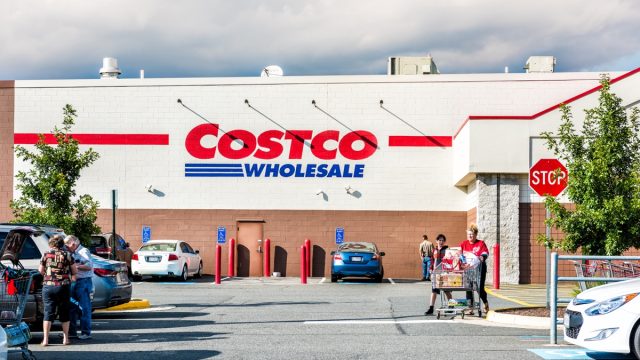
An annual $65 fee scores you access to Costco’s extensive collection of bulk merchandise, discounted name-brand apparel (including brands like Champion and Nautica), and culinary dupes. For many families, the membership fee is easily offset by what they save within the first few months.
However, some experts argue that Costco’s strategic architectural design and pricing model is a way to lure shoppers in and cough up more money. In a new post, business guru Adam Burge, of the famous Instagram account @corporatesurprises, shares seven ways Costco is tricking its members into spending more.
RELATED: 4 Major Costco Changes Coming to Stores, and How They’ll Affect You.
1
Price anchoring
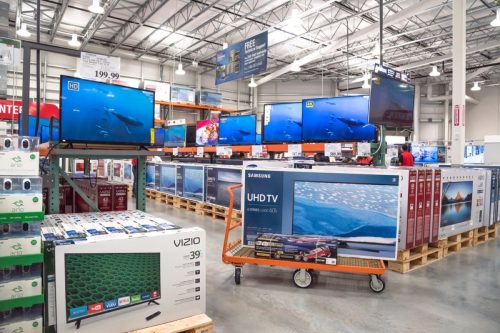
Shopping at Costco is kind of like walking through an amusement park. There are different “lands” or themed zones. For example, right when you enter Costco, the first zone you’re greeted with is the display of big-ticket items, such as smart TVs or luxury jewelry.
Don’t be fooled, this is no mistake.
“This isn’t just for show—anchoring your brain to these prices makes everything else feel like a bargain,” explained Burge. “According to retail analysts, this tactic increases the perceived value of mid-tier items and raises the average cart total significantly.”
He pointed out, “That $19.99 bulk detergent? Suddenly feels like a steal.”
2
Artificial constraints and urgency
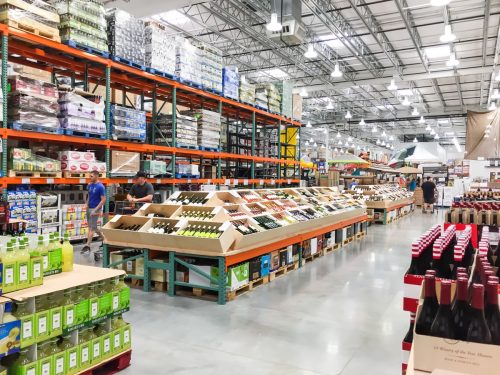
FOMO, or the fear of missing out, is real…especially in the shopping realm. If you see an item tagged with a “Limited Time” or “Special Edition” label, you might be more inclined to purchase it, even if you don’t necessarily need or want it, just out of fear of exclusion.
“Costco rotates inventory often, so if you don’t buy now, it might be gone for months…or forever. This tactic drives faster decisions—and is part of why Costco sells out of seasonal items in days,” shared Burge.
3
Reciprocity bias
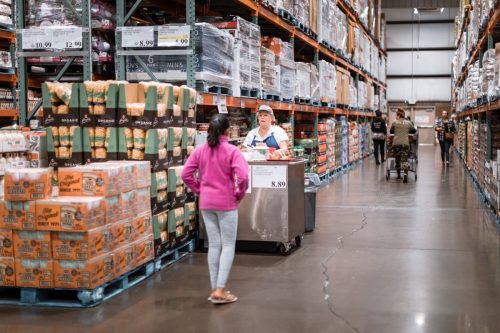
Let’s talk about Costco’s beloved free samples—which, let’s be honest, aren’t actually free.
“That one bit of ravioli? Converts to a cart full of frozen dinners,” stated Burge. He called the warehouse’s free sample stations a “$500 million-per-year strategy disguised as kindness.”
And he’s not the only one who thinks so. “Many studies have shown that providing free samples can boost sales by at least 30 percent, swaying you to buy things you never planned on purchasing,” Sara Skirboll, a shopping and trends expert at RetailMeNot, previously told Best Life.
RELATED: Costco Shoppers Are Abandoning These 8 Kirkland Products: “Worse Than Anything I’ve Tried.”
4
Commitment and consistency
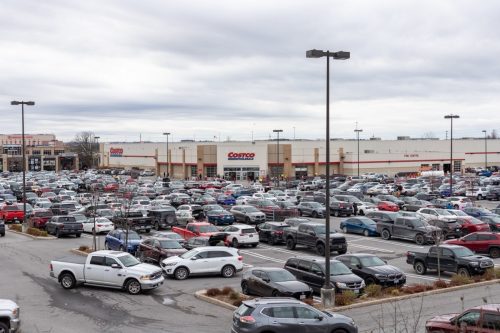
According to Burge, Costco members “spend two times more per trip than non-members at other big-box stores” because they feel pressured “to get [their] money’s worth.” This is what he called “a behavior lock-in.”
Costco’s SEC filings state that its membership fees have “a significant effect on profitability” and “reinforce member loyalty,” as Best Life previously reported. “Because they’re incurred before the shopping even begins, most consumers don’t take them into account when considering the price of a Costco item, and thus think they are saving more than they truly are,” we stated.
5
Environmental psychology
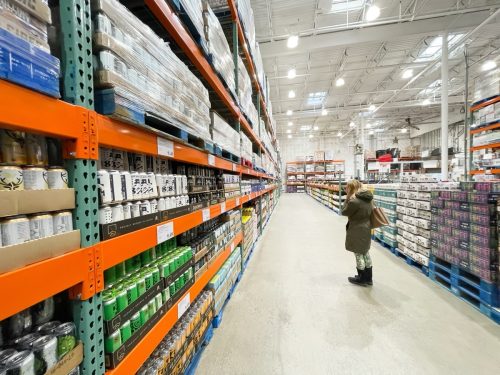
Have you ever noticed that Costco warehouses don’t play music or have signs displayed? Or what about the fact that they rely heavily on bright, fluorescent lighting versus natural light—why aren’t there any windows? According to Burge, this store floor design is “intentionally stark” and strategic.
“It keeps you focused on one thing: Buying. And with huge carts and wide aisles, the space itself encourages volume. Shoppers stay longer and spend more—without even realizing it,” he said.
As a study published in the Journal of Marketing pointed out: “The longer a shopper is in the store and exposed to more items, the greater the probability that the shopper will be exposed to items that cue a forgotten want or need.”
6
Endowment effect
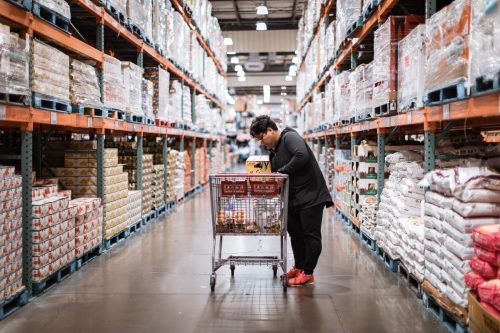
With retail theft levels still going through the roof, many stores are locking items behind glass cages—but not Costco. In fact, the warehouse embraces the endowment effect, which is quite the opposite.
“Physically handling a product increases your emotional connection to it,” Burge explained in his post. “When you sample, hold, or load a 12-pack into your cart, you start to feel like you own it. That’s why Costco displays are open, unpackaged, and inviting. It’s not chaos. It’s conversion.”
RELATED: 9 Costco Insider Secrets Every Member Doesn’t Know.
7
Peak end rule
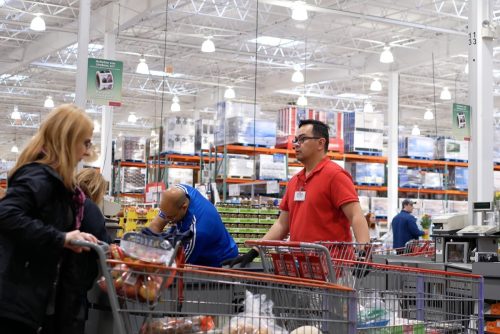
Costco’s checkout ritual has undergone some recent changes, which, for the most part, have gone over well with shoppers. This is crucial for the company’s long-term success, said Burge.
“This ‘peak end’ bias makes you remember the best and final moments most. It’s why people enjoy the Costco run—even if the lines were long and the store was packed,” he elaborated. “Positive endings [lead to] 83 percent return rate within 30 days.”