3 Plants You Should Prune Before Winter Begins

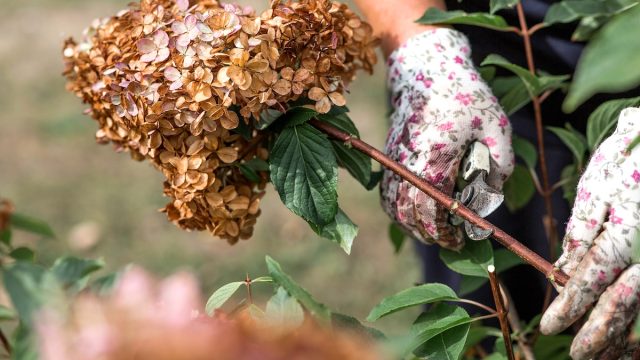
Perennial plants bring life to your yard year after year, but you’ll need to protect them from the harsh winter weather if you want them to look their best come spring. Pruning—the practice of cutting back branches, buds, or spent flowers to make way for regrowth when the warmer weather returns—is one way to give your plants a fresh start. And, for many plant varieties, right now, in the late fall, is the best time to perform this crucial aspect of maintenance.
If you’ve got your shears at the ready, but need more guidance to get going with confidence, a little information goes a long way. Here’s a simple guide to pruning three key plants this fall, before winter can damage your most prized perennials.
RELATED: The #1 Tree to Plant in November for Stunning Spring Blossoms.
1. Roses

Why prune roses for winter?
Pruning roses before winter helps protect them from damage and sets them up for strong, healthy growth in the spring.
As temperatures drop, unpruned roses with tall or leafy canes are more likely to suffer breakage from wind or heavy snow. Trimming them back reduces this risk and allows the plant to focus its energy on root and crown health during dormancy.
Stopping deadheading and fertilization by late summer also signals to the plant that it’s time to slow down, preventing tender new shoots that would be killed by frost.
Overall, winter pruning keeps roses compact, reduces disease risks from dead or damaged wood, and ensures that energy is stored where it’s most needed for next season’s growth.
How to prune roses for winter:
Experts from Washington State University say you should begin in early November by removing at least the top third of the plant’s growth to prevent snow or ice from weighing down and breaking the canes. Cut back long canes to about 12 to 18 inches and remove any dead or crossing branches.
Focus on cutting out any dead, diseased, or weak stems, and make clean cuts at a slight angle. Save major shaping and thinning for spring, when the danger of frost has passed and new growth begins to appear.
After pruning, apply a thick layer of mulch—such as straw, compost, or leaves—around the base of the plant, covering the graft or root crown to insulate against freezing temperatures, WSU advises. Finally, ensure the soil remains moist before winter sets in, as this helps protect roots from drying out during dormancy.
RELATED: The #1 Shrub to Plant This Fall for Beautiful Winter Color.
2. Hydrangeas (certain varieties)
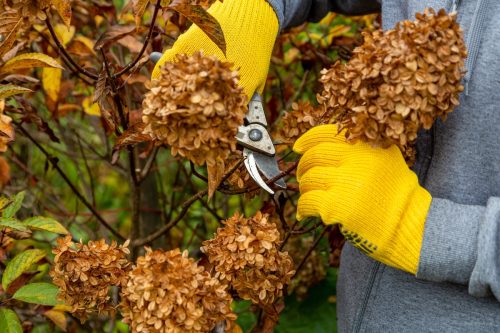
Why prune hydrangeas for winter?
When neglected, shrubs like hydrangeas can become “leggy”—meaning their stems grow long and spindly and their foliage grows sparse. To prevent this and promote healthy new growth, it’s important to prune your plants in the fall while also ensuring that they get plenty of light and fertilizer.
How to prune hydrangeas for winter:
Before you get started, it’s important to determine which type of hydrangea you have in your yard. Only certain types—panicle (Hydrangea paniculata) and smooth (Hydrangea arborescens) varieties—should be pruned in late fall. Others bloom on old wood and shouldn’t be trimmed before winter begins.
If you’ve identified that you have one of those two types, you can cut back your stems by about one-third. Gardening experts from the plant nursery store Proven Winners say that any more will compromise your plant’s structural integrity, making it unable to stand upright.
“The plant needs to retain enough foliage to make an adequate amount of food to support the root system,” they explain.
They add that while routinely planned pruning is effective and necessary, pruning to reduce size as your plant grows too large could backfire: “Pruning your hydrangeas to reduce their height isn’t effective because they will grow right back to their original size, or even larger because the act of pruning stimulates new growth. Instead, transplant your too-large, still-dormant hydrangea to a new spot in early spring and replace it with a variety that naturally stays shorter.”
RELATED: 11 Best Deer-Resistant Plants to Protect Your Yard This Fall.
3. Ornamental Grasses
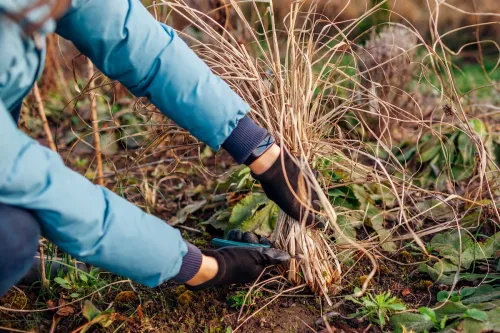
Why prune ornamental grasses for winter?
Ornamental grasses can add visual intrigue and texture to your garden, and because they’re often regionally native and perennial, they tend to be hardy and easy to care for. Yet come winter, they can also cause soggy, matted clumps under snow—leaving unsightly spots in their wake.
According to The Spruce, this is why many people choose to prune their plants as soon as the foliage turns brown. However, other gardeners leave tall grasses standing for winter interest, trimming them later in mid to late spring as they begin to see new growth in the warmer weather.
How to prune ornamental grasses for winter:
To prune your ornamental grasses, bundle them up with wide tape and cut them using pruning shears. You can cut them back to four to six inches above the soil line once the foliage turns brown. Using a biodegradable tape makes for easy composting, The Spruce notes.