7 Best Gut-Health Foods to Eat This Year, Gastroenterologist Says


Oftentimes, the best advice regarding social media health trends is to take them with a grain of salt. After all, it’s usually not doctors peddling the latest supplement or diet. But when it comes to gut-health trends, an expert has entered the chat to cut through all the noise. Gastroenterologist Joseph Salhab, MD, recently shared the seven best gut-health foods to eat this year, and some of them (we’re looking at you, pickles!) might surprise you.
RELATED: Gastroenterologists Say This Is the #1 Food for Your Gut Health.
1
Fresh Dates
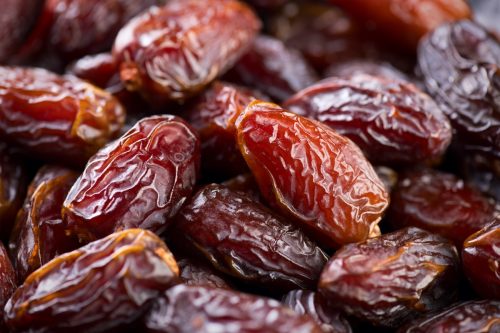
In a new TikTok video, Salhab shares the foods that should be trendy this year for gut health. First on his list are fresh dates, which he refers to as “nature’s multivitamin.”
He notes that this fruit is blood-sugar friendly, despite being a sweet treat, and that it’s a “polyphenol powerhouse.”
Polyphenols are natural plant compounds that have strong antioxidant and anti-inflammatory properties. In fact, a 2014 study published in the Journal of Nutritional Science found that consuming dates may improve colon health by boosting good gut bacteria and potentially slowing the growth of colon cancer cells.
Additionally, dates are very high in fiber, which promotes digestive health.
2
Fermented Pickles
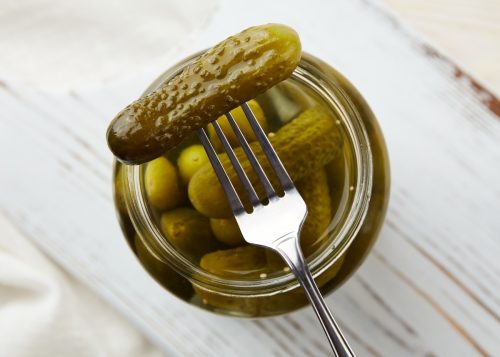
Pickles might not be the first food you think of in relation to gut health, but Salhab says those that are fermented without vinegar function as a “natural probiotic.”
This is because when pickles are fermented with vinegar, the vinegar kills both bad and good bacteria. However, when they’re fermented naturally in salt water, beneficial gut bacteria can flourish.
In general, fermented foods—including kimchi, sauerkraut, and kefir—are great for gut health because the good bacteria produced during the fermentation process create probiotics, which, in turn, reduce inflammation and improve your immune system.
3
Greek Yogurt
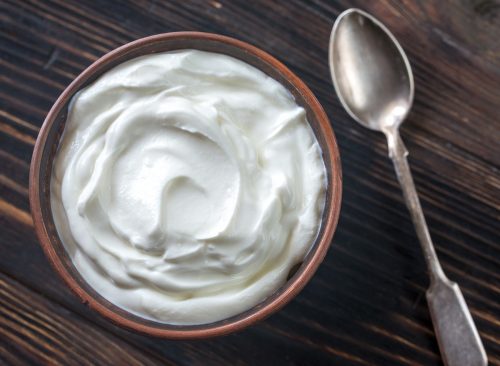
Greek yogurt is another food rich in probiotics. It’s also high in protein, which helps keep you fuller for longer. And unlike traditional yogurt, it’s lower in lactose, which is easier on your digestive system.
Salhab points out that Greek yogurt has even been shown to reduce colon cancer risk. To his point, a recent study published in the journal Gut Microbes found that, because of the beneficial bacteria Bifidobacterium found in yogurt, consuming the food long term may protect against the growth of specific colon cancer tumors.
RELATED: 7 Drinks That Protect Your Liver, Gastroenterologist Says.
4
Watermelon and Lime
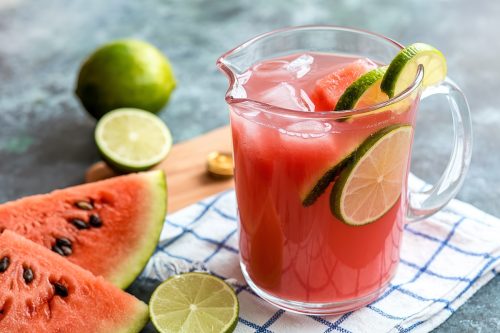
Salhab says that watermelon and lime can also reduce the risk of colon cancer, as well as stomach cancer.
A 2023 study published in the World Journal of Gastroenterology studied the effects of different fruit consumption on colon cancer risk. These researchers found that watermelon was linked to a 26 percent lower risk (the highest), while citrus fruits were linked to a 9 percent lower risk. (Of note, apples reduced the risk by 25 percent and kiwis by 13 percent.)
A 2021 study published in the Journal of Functional Foods arrived at similar findings regarding watermelon.
“Watermelon had one of the strongest effects on decreasing colon cancer risk in this meta-analysis—probably because of its lycopene content,” Salhab previously explained of this study. (Lycopene is the antioxidant that gives watermelon its coloring.)
As for limes, he noted that they are “packed with antioxidants and vitamin C.” So, to enjoy these fruits together, drizzle a bit of lime juice on your cut-up watermelon!
5
Sourdough Bread
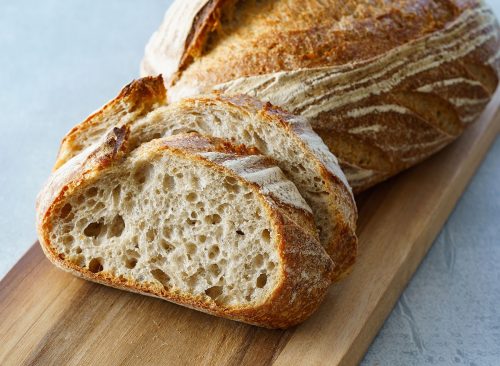
Bread gets a bad name, but Salhab says sourdough bread is actually high in fiber and prebiotics. He adds that it’s a “bloat-friendly” food thanks to being lower in gluten than traditional bread.
As Best Life previously explained, “That’s because the fermentation process helps break those agents down, consequently leading to a spike in prebiotic and probiotic properties, according to a 2021 report published in the journal Microorganisms.”
6
Broccoli
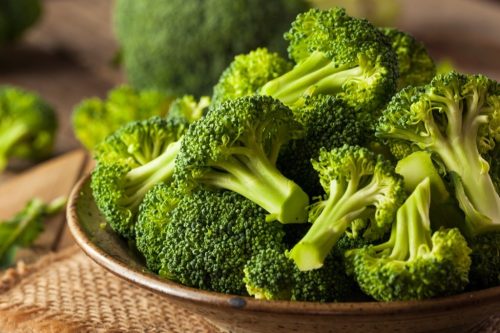
Liver health is a big part of gut health, as blood from your digestive system flows straight to the liver. And Salhab says the compound sulforaphane that’s found in broccoli “increases activity of the liver’s detox enzymes.” In other words, this veggie can help your liver to remove toxins from your body. (Sulforaphane is especially abundant in broccoli stalks.)
RELATED: Gastroenterologist Says This 2-Ingredient Snack Is a “Gut Health Powerhouse.”
7
Berries
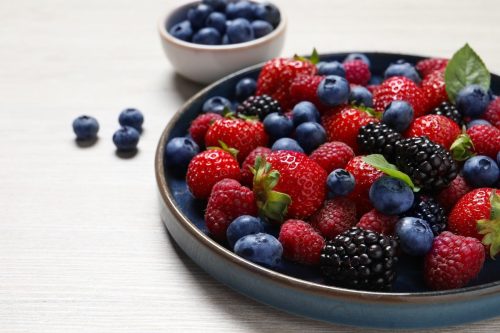
Since berries are so high in antioxidants and anti-inflammatory flavonoids, eating these fruits can help with everything from brain health to anti-inflammation to healthier skin.
Since they’re high in fiber (especially raspberries and blackberries), berries also help with digestion and weight loss. And Salhab says they improve blood flow to the liver.
In fact, an analysis published in the journal Nutrition Reviews cited research showing that berries help to lower “bad” LDL cholesterol, reduce overall fat damage in the blood, control blood sugar, and boost the body’s ability to fight cell damage.
- Source: Journal of Nutritional Science: The impact of date palm fruits and their component polyphenols, on gut microbial ecology, bacterial metabolites and colon cancer cell proliferation
- Source: Gut Microbes: Long-term yogurt intake and colorectal cancer incidence subclassified by Bifidobacterium abundance in tumor
- Source: World Journal of Gastroenterology: Different types of fruit intake and colorectal cancer risk
- Source: Journal of Functional Foods: Watermelon powder supplementation reduces colonic cell proliferation and aberrant crypt foci by upregulating p21Waf1/Cip1 expression
- Source: Microorganisms: Sourdough Microbiome Comparison and Benefits
- Source: Nutrition Reviews: Berries: emerging impact on cardiovascular health