The #1 Reason Turbulence on Flights Will Keep Getting Worse

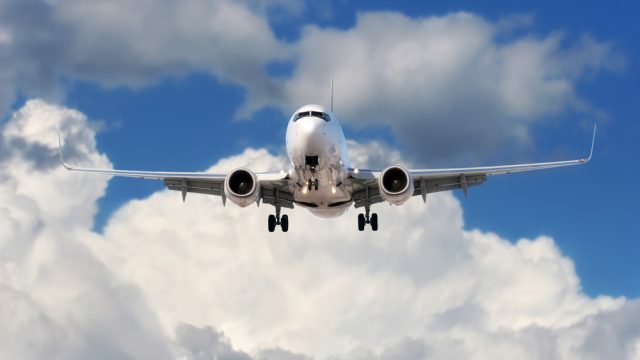
Getting stuck with a dreaded middle seat on a long-haul route or facing delays might feel like the worst things that can happen during a flight. However, hitting bumpy skies is an entirely different level of travel nightmare. Particularly rough skies can turn even the most seasoned travelers into anxious passengers as they get jostled all the way to their destination. Unfortunately, scientists are now warning that turbulence on flights will only keep getting worse due to ongoing climate change.
RELATED: 2 of the World’s Most Turbulent Airports Are in the U.S., New Survey Shows.
A new study warns of a bumpy future for air travel.
The latest information comes from new research published in the Journal of the Atmospheric Sciences last month by scientists at the University of Reading in the U.K. Furthering some of their previous research, the team aimed to better understand how rising global temperatures could be affecting jet streams (or high-altitude air currents) that flow in the range where commercial airlines typically fly around 35,000 feet.
The scientists found that overall warming has led to stronger wind shear for pilots to contend with. Essentially, this means that wind speeds can vary at different altitudes, which can in turn create a much bumpier flight. And while nature can make some jostling inevitable, these emerging conditions are slightly different.
“Increased wind shear and reduced stability work together to create favourable conditions for clear-air turbulence—the invisible, sudden jolts that can shake aircraft without warning,” Joana Medeiros, a PhD researcher at the University of Reading and the study’s lead author, said in a press release. “Unlike turbulence caused by storms, clear-air turbulence cannot be seen on radar, making it difficult for pilots to avoid.”
Dangerously turbulent skies are becoming more common.
The latest research builds upon an earlier study conducted by the same group and published in 2023 in the journal Geophysical Research Letters.
In that case, the researchers analyzed reports and found that flight routes over the North Atlantic saw a 55 percent increase in reported hours of severe turbulence, jumping from 17.7 hours in 1979 to 27.4 hours at the start of the current decade. Moderate and light turbulence were also up, increasing 37 percent and 17 percent during the same period, respectively.
The study’s authors pointed out that the increase hasn’t just resulted in passengers’ frayed nerves. The airline industry in the U.S. alone is spending $150 million to $500 million per year due to the effects, while increased exposure to turbulence increases wear and tear on aircraft, according to Mark Prosser, PhD, one of the 2023 study’s authors.
And according to National Transportation Safety Board (NTSB) data, there have been 207 people hospitalized for at least two days with severe injuries caused by turbulence in the U.S. since 2009, as of July 29, 2025, the BBC reports.
RELATED: 10 Clothing Items You Shouldn’t Wear on a Plane.
What does this mean for the future of travel?
Unfortunately, the latest data paints a relatively grim picture for anxious flyers—even beyond the North Atlantic route.
“We can expect a doubling or tripling in the amount of severe turbulence around the world in the next few decades,” Paul Williams, PhD, a co-author of the study and atmospheric scientist at the University of Reading, told the BBC. “For every 10 minutes of severe turbulence experienced now, that could increase to 20 or 30 minutes.”
Of course, experts say not all of the increased turbulence will lead to serious injuries or events. But it could still noticeably change your flying experience.
“Pilots may need to keep seatbelt signs on longer and suspend cabin service more often during flights, but airlines will also need new technology to spot turbulence before it hits, protecting passengers as skies become more chaotic,” Williams said in a press release.