3 Winter-Blooming Houseplants That Thrive in Low Light


No matter how you decorate, there’s nothing quite like the fresh pop of color that a blossoming houseplant provides. Unfortunately, while the indoors can help protect your plants from a hard freeze during harsh weather, it can also be challenging to keep them thriving if you’re working with dim conditions. However, you don’t need to wait for spring blossoms, thanks to a few options that will not only survive but also provide that boost of brightness you’re looking for. Read on for the winter-blooming houseplants that thrive in low light.
RELATED: 3 Plants You Should Prune Before Winter Begins.
1. Cyclamen persicum
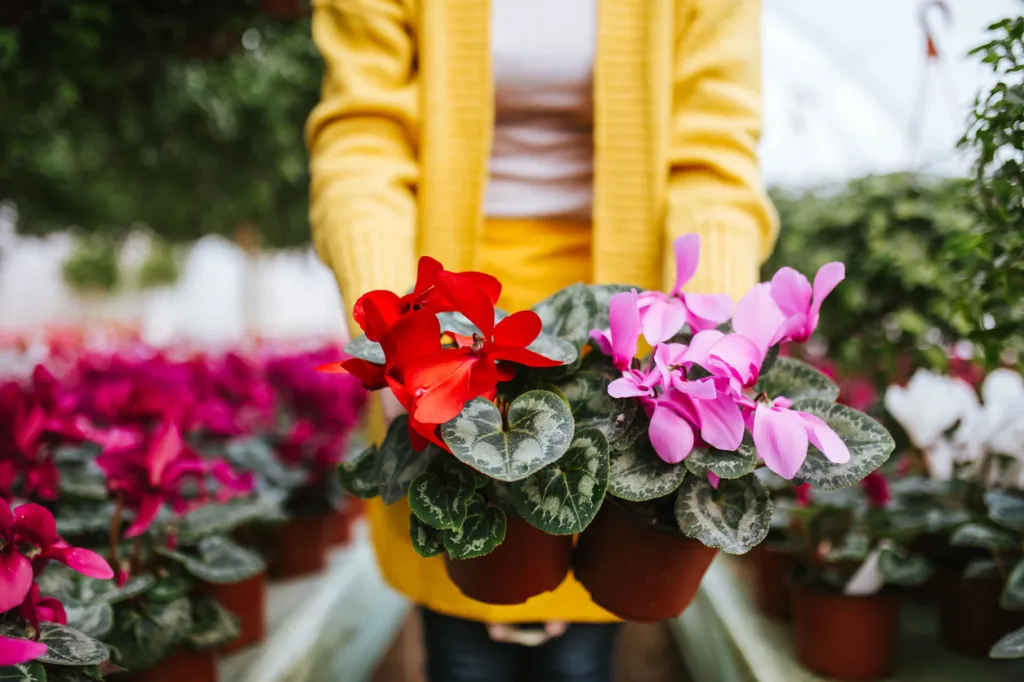
Even though winter is typically the time of year when plants drop their colorful flowers, not all species follow the same spring and summer blossoming cycles.
This perennially popular perennial (which is also known as “florist’s cyclamen“) activates in the opposite order of most plants, going dormant in the summer before coming back in the fall and winter with bright pink, white, red, and purple blossoms along with its heart-shaped leaves, according to The Spruce.
Cyclamen only need bright, indirect light during the winter when they’re actively growing, meaning you don’t need a windowsill space to keep them happy. However, they also grow best in cooler conditions, ideally in the range of 60 to 70 degrees Fahrenheit during the day. That’s because warmer temperatures will shock it back into dormancy, so try to find someplace where a heat source won’t be beating down on it too hard.
When warmer weather arrives in the spring and summer and the plant shuts down again (although it might never go fully dormant if you run air conditioning), the plant can be kept in a cool area of the house with low light and decent air circulation, per the Spruce.
When properly cared for, cyclamen blossom for up to three months and can grow up to about eight inches tall, according to the University of Wisconsin-Madison horticulture extension.
Because these plants also require high humidity, some struggle to keep their plants alive and instead use them as temporary decoration. Experts suggest bottom watering (which involves keeping the potted plants in a tray and pouring water into it so the roots can soak up water) and setting the pot in wet gravel to provide the constant humidity it craves.
RELATED: 9 Houseplants That Will Help You Breathe Better.
2. Christmas Cactus
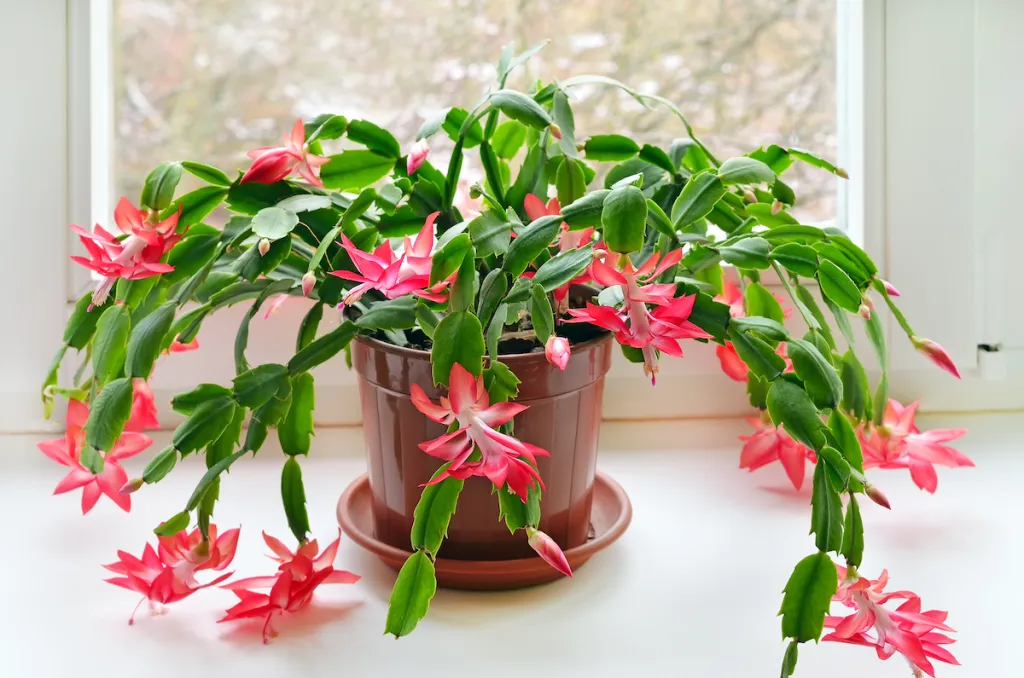
Interestingly, the Christmas cactus’s name is both correct and a bit misleading. Native to South America, this plant blossoms with brilliant pink, red, or white flowers around Christmas time (or from November through February) in the Northern Hemisphere, according to Lively Root. However, unlike its title suggests, the plant is actually a succulent and not a genuine spiny cactus.
It’s important to note that distinction because, unlike hearty, spiny cacti that can go long periods without water or much maintenance, Christmas cacti (Schlumbergera bridgessii) require some finesse to keep healthy.
Like cyclamen, they require bright but indirect light, but shouldn’t be placed directly where sunlight can damage their leaves. In fact, it’s recommended that plants sit near a window for a few hours in the morning before placing them in a dark, cool space around 50 degrees Fahrenheit for at least 13 hours per day to help kick-start their flowering.
If you’re looking for a good place for your not-quite-cactus to thrive, a somewhat bright bathroom can often be an ideal location—especially because they also prefer humidity, according to The Farmer’s Almanac. During the summer, it’s best to store them on a shady, unheated porch out of direct sunlight until the weather dips to about 50 degrees Fahrenheit again.
RELATED: The #1 Shrub to Plant This Fall for Beautiful Winter Color.
3. Peace Lily
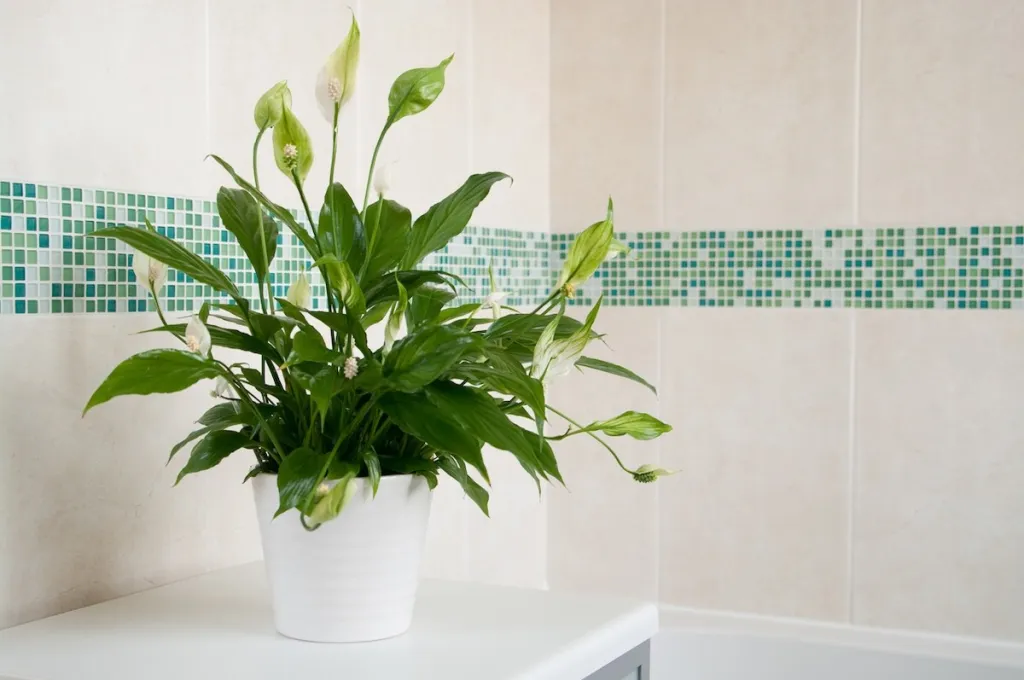
In yet another slightly misleading name, the peace lily technically isn’t a lily at all. However, these perennials (which get their names from their wide white sheaths that look like surrender flags) can bloom throughout the year when properly cared for, according to ProFlowers.
Since these plants typically grow on rainforest floors, they’re best kept in indirect light, and can sometimes even thrive in entirely windowless rooms. Otherwise, putting them six to eight feet away from a north or east-facing window can help them flourish, per ProFlowers. They also prefer warmer, humid environments, so finding someplace away from drafts or intense heat is also ideal.
To encourage blossoming, make sure the plant’s soil is always moist (but not waterlogged) and keep it near a window for a few hours each morning, according to The Farmer’s Almanac. Indoor versions of the plant can also grow relatively tall to around 18 inches, making them a great floor ornament or bathroom decoration.