4 Regions That Will Be Unusually Windy This November and December

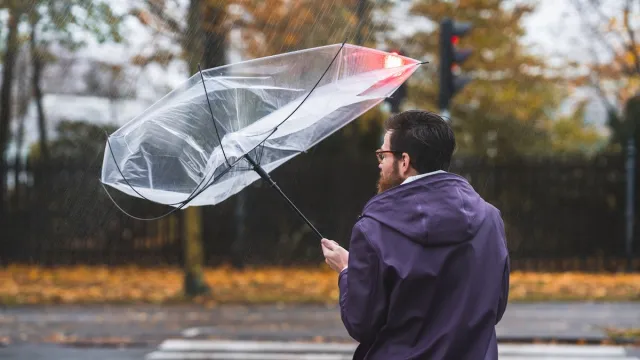
The march towards winter brings some of the more jarring weather changes of the year, from dropping temperatures to the arrival of the first snowfall. But if there’s anything that can really make it feel like fall is trudging forward, it’s a bout of gusty weather. As with any change of seasons, there’s always the potential for moving air masses to make conditions blustery (and in turn, downright frigid). Now, with anomalies like La Niña at work, certain regions are expected to experience unusually windy conditions through November and December 2025. Read on to see if you’re affected.
RELATED: 3 Regions Where Winter Will Arrive Earlier Than Usual This Year.
1. The Great Lakes and Upper Midwest
When it comes to regional weather lore, few regions are as steeped as the northern central area of the U.S. And if you’ve heard “The Wreck of the Edmund Fitzgerald” by Gordon Lightfoot playing recently, you might have an idea why.
Historically, mid-fall to early winter sees a shift in the region where cold air moving in from the north is more likely to collide with warmer air masses moving up from the Gulf of Mexico, according to The Farmer’s Almanac. This in turn creates “the gales of November,” which are strong storms that can reach the same strength as a category two hurricane (and massive waves that are 20 feet and taller on the lakes themselves).
The Great Lakes generate part of this anomaly, as they tend to retain a higher temperature than the frigid air masses above them earlier in the season. This effect was already witnessed around Nov. 10, when an Arctic blast passed over the much-warmer-than-average lakes to generate an early-season snowstorm that brought blustery conditions.
This year, on top of the above-average lake temperatures, La Niña could also likely affect wind patterns in the region, according to the National Weather Service (NWS). That’s because changing jet stream patterns can pull more cold air masses that generate these conditions in the first place.
2. The Northeast
The thing about Midwestern weather is that it often finds a way to affect its neighbors, too—especially to the east. This fall and early winter, the top corner of the U.S. is likely to see higher winds (along with rain and snow) as a result of the warmer Great Lakes generating more storms.
The season’s first Arctic blast was a perfect example of this, with many parts of Upstate New York and northern New England seeing significant snowfall around Nov. 10, per The Weather Channel. And likewise with La Niña, the shifting jet streams could pull colder, blustier air into the region more often than usual.
RELATED: The #1 Sign Your Region Is About to Get Its First Hard Freeze.
3. The Pacific Northwest
The higher latitudes might want to buckle up for a blustery transition into winter, it seems. According to a seasonal long forecast from the European Centre for Medium-Range Weather Forecasts (ECMWF), above normal wind speed probabilities are “moderately intense” for October and into November.
It may not stay too windy for long, though: Once December arrives, the risk of high winds in the region drops slightly. However, the probability for gusty weather is still above normal for the month before picking up again in January.
4. The Rockies and Plains States
With the average date of their typical first snowfall of the year well in the rear view mirror by now, the central western part of the U.S. is still in for some blustery weather in the not-too-distant future. According to the U.S. Week-2 Hazards Outlook forecast released by the NWS on Nov. 12, the Rockies and Plains are at a slight to moderate risk of high winds over the next 14 days.
Areas closer to the Rocky Mountains (especially in Utah, Wyoming, western Montana, eastern Idaho, western Colorado) and parts of the Southwest are the places at moderate risk. This is especially prevalent from Nov. 20 through Nov. 26, per the forecast.