7 Best Fall Foliage Trees to Peep in Your Region

Throw on your favorite cozy sweater and grab a pumpkin spice latte for the road—it’s leaf-peeping season! Several regions, including the Rocky Mountains and the Midwest, are expected to hit peak foliage this month. The most beautiful places to see fall foliage this year are linked to the type of tree species in that area. So before you go mapping your fall road trip, bookmark these trees for the best views.
RELATED: 6 Regions Where Fall Foliage Will Peak This Month.
How to know the best fall foliage trees in your region
As Best Life previously reported, “Leaf-peeping season runs from mid-September through early November, with most regions reaching peak foliage around mid-October. Insider tip: Cities in the north, like those along the Canadian border, are typically the first to turn. As the days and weeks go by, those pops of crimson red and golden yellow will venture south.”
However, you might notice southern regions hitting peak before some cities up north. That could have to do with the types of trees planted in that area—some of which are known to produce more colorful foliage than others. This has to do with an area’s hardiness zone.
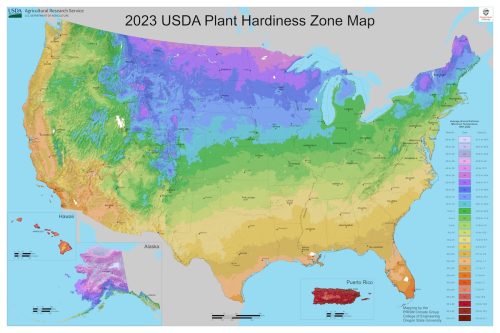
The USDA Plant Hardiness Zone Map is divided into 13 zones based on average winter temperatures (sourced using data from 13,412 weather stations). The department uses a color-coded key to illustrate the different zones.
The 13 zones are:
- Zone 1: light gray
- Zone 2: gray
- Zone 3: pink
- Zone 4: purple
- Zone 5: blue
- Zone 6: green
- Zone 7: light/yellow green
- Zone 8: yellow
- Zone 9: golden yellow and light orange
- Zone 10: orange
- Zone 11: red
- Zone 12: dark red
- Zone 13: red-brown
These zone maps are helpful for horticulturists, so they can best determine which tree species have the optimal chance for growth in a specific area. Come fall, you can reference the map to see where foliage will likely be most colorful.
“As sunlight decreases and cold increases, tree growth slows, and the production of green chlorophyll in leaves begins to slow, revealing fall leaves’ brilliant hues of yellow, orange, and red,” with “oak, birch, [and] beech” trees showcasing the most flamboyant hues,” explains the Old Farmer’s Almanac.
Without further ado, here are the eight best fall foliage trees to peep this autumn—plus, where you can find them based on their zone.
RELATED: 7 Best Spots in the U.S. to See Fall Foliage This Year.
1
Red Maple
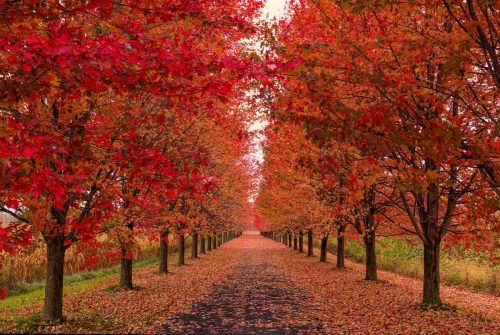
Where to find them: Zones 3 to 9
Native to the Northeast region, red maple trees are known for their “brilliant deep red or yellow fall color,” according to the Arbor Day Foundation. They have a large presence, reaching up to 60 feet tall.
2
Sugar Maple
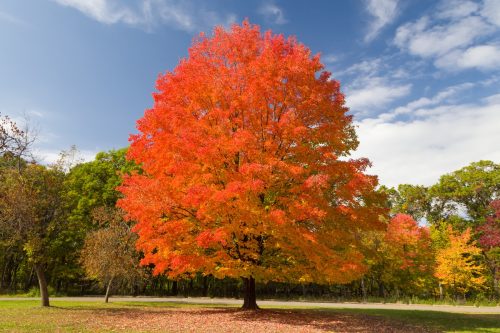
Where to find them: Zones 3 to 8
The award for best fall foliage goes to the sugar maple tree, whose leaves turn into a gorgeous ombré of reds, oranges, and yellows this time of year. They’re most commonly found in New York, West Virginia, Wisconsin, and Vermont.
3
Ginkgo Biloba
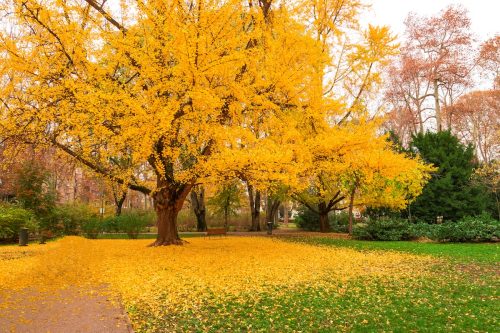
Where to find them: Zones 3 to 8
According to the foundation, ginkgo biloba trees get a lot of city street cred because they “can tolerate a variety of urban conditions, including heat, pollution, salt, and confined spaces.” If you see a tree with only yellow leaves, it’s likely a ginkgo biloba.
4
Eastern Redbud
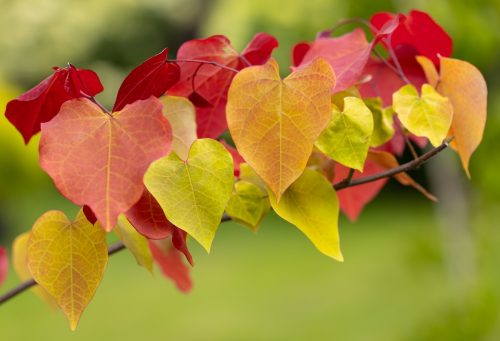
Where to find them: Zones 4 to 9
Native to the U.S. eastern woodlands, the eastern redbud is famous for its rosy pink floral display in the spring. However, come summer, its leaves turn dark green before transitioning to a golden yellow in the fall.
5
Black Tupelo
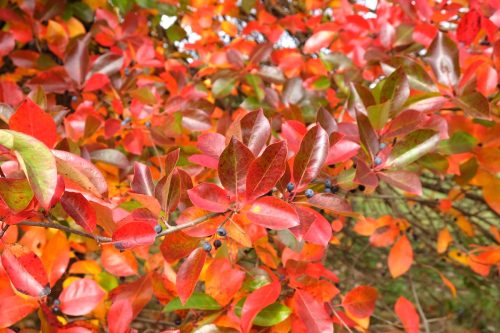
Where to find them: Zones 4 to 9
Keep your eyes peeled for black tupelo trees, which provide “stunning” shades of yellow, orange, bright red, purple, and scarlet, per the Arbor Day Foundation. The black tupelo is considered “one of the best and most consistent native trees for fall color.” This species can reach up to 50 feet tall.
6
Shumard Oak
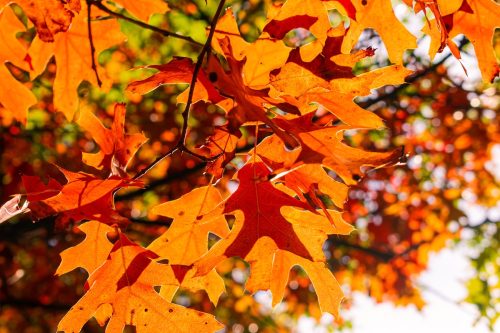
Where to find them: Zones 5 to 9
You won’t find shumard oak trees along the Northern Tier. The species produces bold red-orange leaves and acorns.
7
Sourwood
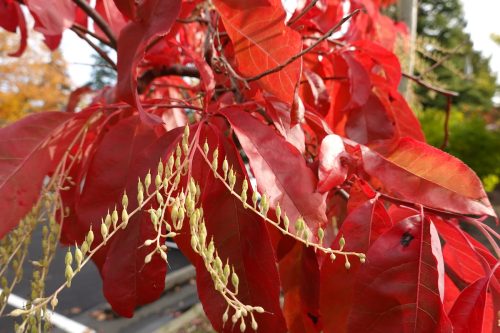
Where to find them: Zones 5 to 9
During autumn, sourwood trees turn crimson, purplish-red, and yellow. Fun fact: its leaves produce honey!