Doctors Discover Alarming New Ozempic Side Effect: “Proceed With Caution”

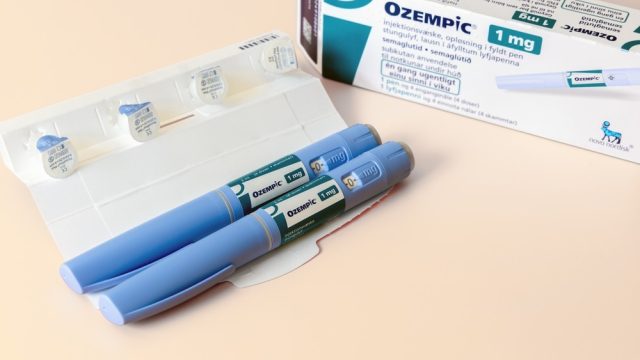
In recent months, scientists have shared groundbreaking research that links popular weight-loss drugs to a host of unintended positive outcomes. For example, studies show that these medications may reduce the risk of dementia and Alzheimer’s, curb cravings for alcohol, and even help people live longer. But this doesn’t negate the drugs’ potential downsides, one of which has doctors urging patients to “proceed with caution” before they begin taking Ozempic or similar weight-loss medications.
RELATED: Doctors Reveal Bizarre Ozempic Side Effect That Can Make Feet “Floppy and Wrinkly.”
Weight-loss drugs like Ozempic could lead to depression.
A new study published in the journal Current Neuropharmacology links Glucagon-like Peptide-1 (GLP1) receptor agonists to a heightened risk of depression and suicidal ideation (SI) in certain people.
GLP1 drugs include Mounjaro and Ozempic (approved only to treat type 2 diabetes but often taken off-label for weight loss), as well as Zepbound and Wegovy (approved for weight loss).
According to a press release, an international team of 24 researchers used “advanced pharmacogenomic computational analyses” to determine how GLP1 drugs interact with mood-regulating genes, specifically those that regulate dopamine, the so-called “feel-good” hormone.
They found that these drugs could benefit those with hyperdopaminergia, an excess of dopamine in the brain that’s commonly associated with schizophrenia, addiction, and obesity, as Cleveland Clinic explains. However, for those with low dopamine, or hypodopaminergia, GLP1 drugs could have harmful effects. Low dopamine may be associated with Parkinson’s disease, ADHD, and depression.
The press release states that the researchers concluded that “chronic use of these drugs could dysregulate dopamine signaling, potentially leading to depressive symptoms, mood disturbances, and SI.” Depression was the most commonly reported adverse side effect, followed by anxiety and SI.
“This study should not be ignored, despite the hype surrounding the positive clinical outcomes of GLP1 receptor agonists,” said senior study author Kenneth Blum, PhD, research professor at Western University Health Sciences and Ariel University. “We urge the clinical prescribing community to proceed with caution to avoid another tragic wave of ‘people dying to lose weight.'”
The researchers are also calling for regulatory agencies such as the Food & Drug Administration (FDA) to take these findings into consideration when it comes to drug warnings.
“Before prescribing GLP1 receptor agonists, it would be prudent to use genetic testing tools to assess a patient’s dopamine function and addiction risk profile,” suggested study author Panayotis K. Thanos, PhD, research professor at Buffalo University.
RELATED: Doctors Say They’ve Discovered “Holy Grail” Weight Loss Pill That Works Just Like Ozempic.
Other research links weight-loss drugs to suicidal thoughts.
This isn’t the first time the topic of weight-loss drugs and suicidal ideation has come up. As the New York Post reported last year, the FDA’s adverse event reporting system “received 606 reports of psychiatric disorders connected to Ozempic, along with 324 reports connected to Saxenda and 190 to Wegovy in 2023.”
More specifically, a 2024 study published in JAMA Network Open found a 45 percent higher risk of suicidal thoughts in people taking semaglutide, which is sold under the brand names Ozempic and Wegovy and manufactured by pharmaceutical company Novo Nordisk, as compared to liraglutide, an older GLP1 drug.
“The risk was about four times higher in people who were also taking drugs to control depression and anxiety, suggesting that this group may be at even higher risk for mood effects with these medications,” reported CNN at the time. “When the study authors excluded cases of people taking semaglutide and antidepressants, the association disappeared—suggesting that people who were taking both drugs were driving the risk.”
RELATED: Researchers Say This Popular Weight-Loss Drug Can Keep You Slim for 3 Years and Counting.
However, some experts say the results are inconclusive.
Not all experts are convinced that GLP1 drugs directly lead to depression or SI.
“It is hard to tease out from this study whether it is the drug doing this or the mood disorder,” said Mahyar Etminan, PharmaD, an expert in drug safety at the University of British Columbia in Vancouver, in speaking with CNN about the 2024 study (which he was not involved in).
Moreover, a Feb. 2025 study published in the British Medical Journal found that “the use of GLP-1 receptor agonists was not associated with an increased risk of suicidality…in patients with type 2 diabetes.”
“We did not observe associations even among patients with a history of psychiatric disorders, such as self-harm, suicidal ideation, and depression,” the researchers noted.
As for the most recent Current Neuropharmacology study, the team of researchers agrees that further investigation is warranted.
“While GLP1 receptor agonists hold promise for treating addictive and behavioral disorders, we must remain vigilant about their potential harm. This study is not intended to break the bubble of hope but to add a layer of precaution in their over-prescription,” concluded Igor Elman, MD, a study author from Harvard University.
If you or someone you know is struggling with thoughts of suicide, you can call or text 988 to reach the 988 Suicide & Crisis Lifeline, a free and confidential service.