Doctors Say These Are the 4 Best Supplements for Constipation


Considering constipation is the most common GI (gastrointestinal) problem, and chronic constipation affects about 15 percent of the U.S. population, you’d think it’s something we’d all be talking about. But like other bathroom-related issues, it remains a bit of a hush-hush topic, leaving many people to rely on grandma’s advice to eat prunes or seek out uncomfortable (and often unhealthy) laxatives. But we’re here to tell you there are more natural ways to relieve constipation, including taking certain supplements.
RELATED: 12 Safe and Easy Ways to Poop Instantly When You’re Constipated.
What constitutes constipation?

Before we get into the best supplements to take for constipation, let’s first understand whether or not you’re truly suffering from the issue.
A common misconception is that you have to poop every day, but experts are quick to dispel this notion.
“Less than three movements per week is generally considered constipation, while three or more loose stools per day is considered diarrhea,” physician Esteban Kosak, MD, previously told Best Life. “Most healthy adults will experience diarrhea or constipation at some point, but a consistent change in bowel habits should always be discussed with your doctor.”
To his point, a 2018 study published in the American Journal of Gastroenterology shared the “3 and 3” metric of normal bowel movement frequency, meaning it’s “normal” to have anywhere from 3 bowel movements a day to 3 bowel movements a week.
If you’re not going at least three times a week, there are many reasons why you might be constipated. According to Cleveland Clinic, the most common culprit is an inadequate intake of fiber. Other causes are dehydration, lack of exercise, consuming excess dairy or cheese, stress, certain medications (painkillers, calcium-containing antacids, and antihistamines, to name a few), and sleep or dietary changes.
In addition to pooping less frequently, you may also experience dry and hard stools that are difficult or painful to pass, as well as a feeling that you haven’t fully emptied your bowels.
Of course, you should talk to your doctor if you’re regularly suffering from constipation. And you may discuss one of the following supplements that experts say can help relieve constipation.
RELATED: Doctor Says These 10 Supplements Can Damage Your Digestive System.
1
Psyllium Husk

As mentioned, many cases of constipation are due to a lack of fiber in one’s diet. The best way to increase your fiber intake is through the foods you eat, such as whole grains, flaxseeds and chia seeds, berries, apples and pears, green leafy vegetables, nuts, and beans and legumes.
But if you can benefit from an added fiber boost, a supplement like psyllium husk can help.
“It adds moisture and bulk to stool, making it easier to have regular bowel movements,” says Jeffery Chester, DO, medical director at the Ohana Addiction Treatment Center.
This is important because “constipation happens because your colon (large intestine) absorbs too much water from your poop,” Cleveland Clinic explains. “This dries out your poop, making it hard in consistency and difficult to push out of your body.”
However, because psyllium husk is a source of soluble fiber, it can cause bloating, gas, and nausea.
“It’s best to start with one teaspoon and increase gradually, unless otherwise recommended by your physician,” advises Chester. He also says to mix psyllium husk with at least 8 ounces of water to avoid choking and gastrointestinal discomfort.
2
Magnesium Citrate

Magnesium is a hot supplement right now. But as Best Life recently shared, it’s important to know which type of magnesium is appropriate for you and your health needs. In the case of constipation, most experts recommend taking magnesium citrate.
“Magnesium citrate relieves constipation by acting like a laxative that draws water into the intestines and softens stools,” explains bioengineer Linda Xu, founder of the supplement brand HUA Wellness. “The softer consistency and increased water content make it easier for the stool to pass. Magnesium also helps muscles contract, making the bowel movement easier.”
However, Xu cautions that certain supplements might contain too much magnesium citrate, which can then backfire and cause diarrhea. Her brand’s version contains 350 mg of magnesium per serving, which is 83 percent of the daily value. “So, it offers a potent dosage enough to help people stay regular with their bowel movements without it being too much,” she notes.
If your magnesium citrate supplement comes in powder form, be sure to take it with at least 8 ounces of water.
RELATED: Doctor Shares What Happens If You Hold Your Poop.
3
Probiotics

Probiotics are another buzzy supplement, touted for their gut-health benefits.
Certified nutritionist Catherine Rall previously explained to Best Life that probiotics “promote the growth of healthy gut bacteria, which in turn break down the foods we eat to make them easier for our bodies to digest and help to reduce inflammation.” This then helps with having regular bowel movements.
Like magnesium, there are countless types of probiotics on the market. However, Brittany Michels, functional dietitian at The Vitamin Shoppe, says the bacterial strains Bifidobacterium lactis and Lactobacillus casei “are especially linked to improved bowel regularity.”
4
Triphala
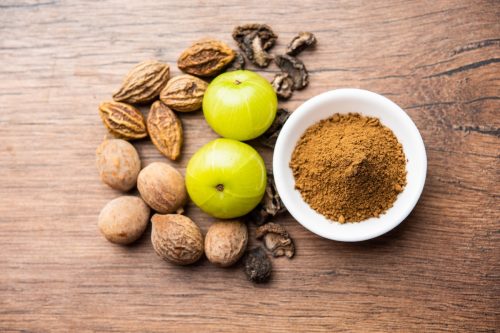
When fiber, probiotics, and magnesium aren’t enough to relieve constipation, Michels says you may consider triphala, “a blend of three small fruits used in Ayurvedic tradition.”
“It works gently by encouraging bowel movements, drawing water into the stool to soften it, and supporting overall gut health,” she explains.
In fact, one study found that “the amount, frequency, and consistency of stool were improved” in a group of people taking triphala, without adverse effects.
Whenever you’re considering taking a new supplement, always first speak with your doctor.