4 Regions Getting Hit With a Polar Vortex This February, Meteorologists Warn

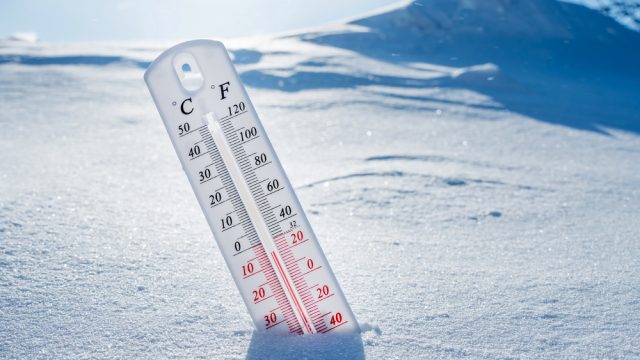
Now that it’s February, we can officially admit that this winter has been a particularly brutal one for much of the U.S. What began with early bouts of frigid temperatures and snow has carried through to a historically massive winter storm that impacted huge swaths of the country.
But if you’ve been waiting for a little bit of relief as we push through the last full month before spring, you might be disappointed. That’s because meteorologists are now warning that a polar vortex will linger through much of the country for most of this February, prolonging the deep freeze for weeks to come.
In addition to a bleak forecast from Punxsutawney Phil, conditions are shaping up for a particularly frigid February. Due to weakened winds caused by warming in the upper atmosphere, the arctic airmass that pushed south from the North Pole in January will continue to bring colder-than-normal weather for the coming weeks, according to a new long-term forecast from AccuWeather. The polar vortex might also get worse as the month rolls along.
“Subsequent blasts of air that occur during the first seven to 10 days of February may not be quite as extreme,” Paul Pastelok, lead long-range meteorologist for Accuweather, said in an update. “However, because the ongoing cold has led to a rapid increase in ice cover on the Great Lakes, the modifying effect of the shrinking open water is progressively being reduced.”
Typically, surface water on the Great Lakes can have a warming effect on passing colder air that tempers the chill. However, the current widespread ice coverage on the bodies of water well above historic averages—along with plenty of ground snow coverage in the surrounding areas—means the arctic air can travel further, bringing chilly temperatures along with it, per AccuWeather.
But which areas will see the worst of it? Read on for the regions that will be getting hit with a polar vortex through February, according to AccuWeather.
RELATED: 4 U.S. Regions Where Winter Storms Are Becoming More Extreme.
1. The Midwest
The northern central states are absolutely no strangers to harsh winters, and this coming month will likely serve as a harsh reminder of that. The southern dip in the jet stream that has been in place since January is expected to remain, keeping arctic air flowing over the Midwest.
The entire region—including Minnesota, Iowa, Wisconsin, Illinois, Michigan, Indiana, and eastern Missouri—is expected to experience temperatures “well below” seasonal averages, according to AccuWeather. The forecast also calls for “persistent cold” throughout the region from Feb. 5 through Feb. 10.
And it’s not just low temperatures on the horizon: AccuWeather also warns that a clipper storm could be in store for the Midwest later this week, bringing snow to the area just before the weekend.
2. New England and the Northeast
The Northeast isn’t warming up anytime soon, either. Forecasts indicate that New England and the surrounding states will experience the same Arctic blast as the Midwest.
Everywhere from Maine through New York and Pennsylvania can expect “persistent cold” from Feb. 5 through Feb. 10, per the AccuWeather forecast. However, most of the region will see temperatures “below” historic averages for the month.
The passing clipper storm expected on Thursday or Friday of this week could also bring some snow to the area, among others. “That storm has the potential to bring snow and ice to much of the northern half of the country from Montana, Wyoming and Colorado to New Jersey, New York and New England in the neighborhood of Feb. 12-15,” Joe Lundberg, senior long-range meteorologist for Accuweather, explained.
RELATED: 4 U.S. Regions Where Winters Are Getting Shorter the Fastest.
3. The Mid-Atlantic
While winters may not always be brutal for some of the central coastal states, this year has proven to be anything but mild. The region is expected to see temperatures “below” historic averages throughout the month, along with “persistent cold” in the near-term from Feb. 5 through Feb. 10, per AccuWeather.
However, there might also be a more pressing event. “In terms of upcoming storms, there will be a moisture-starved feature that spreads an area of snow from portions of Missouri to Virginia from Tuesday to Wednesday [Feb. 3-4],” Lundberg said.
4. The Southeast
After back-to-back snowstorms rounded out January, parts of the Southeast can expect brutally cold weather to continue. From Tennessee through the Carolinas down through the Gulf States and central Georgia, temperatures are expected to be “below” historic averages for the month, according to AccuWeather.
North Carolina and parts of South Carolina could also see “persistent cold” in the coming week, too.