12 Safe and Easy Ways to Poop Instantly When You’re Constipated


Simply put, being unable to poop is one of the more uncomfortable feelings we experience. According to Cleveland Clinic, constipation occurs most often “due to changes in diet or routine, or due to inadequate intake of fiber.” Of course, if the problem is extremely painful or persists, you should visit your healthcare provider. But if you’re looking for a quick release, consider trying these 10 safe and easy things doctors and nutritionists have revealed “will make you poop instantly.” Keep reading for their top advice.
RELATED: What Really Happens to Your Body If You Don’t Poop Every Day, Doctors Say.
1
Eat figs.
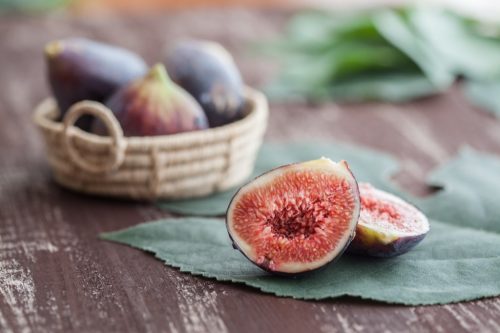
In a video on her popular TikTok channel, naturopathic doctor Janine Bowring, ND, shares that figs are one of the things “that will make you poop instantly” because they’re packed with fiber.
Fiber helps with constipation because it “increases the weight and size of your stool and softens it,” according to the Mayo Clinic. “A bulky stool is easier to pass.”
Other high-fiber foods that Cleveland Clinic recommends are prunes, bran cereal, oranges, pineapples, berries, mangos, and papaya.
2
Have two kiwis a day.
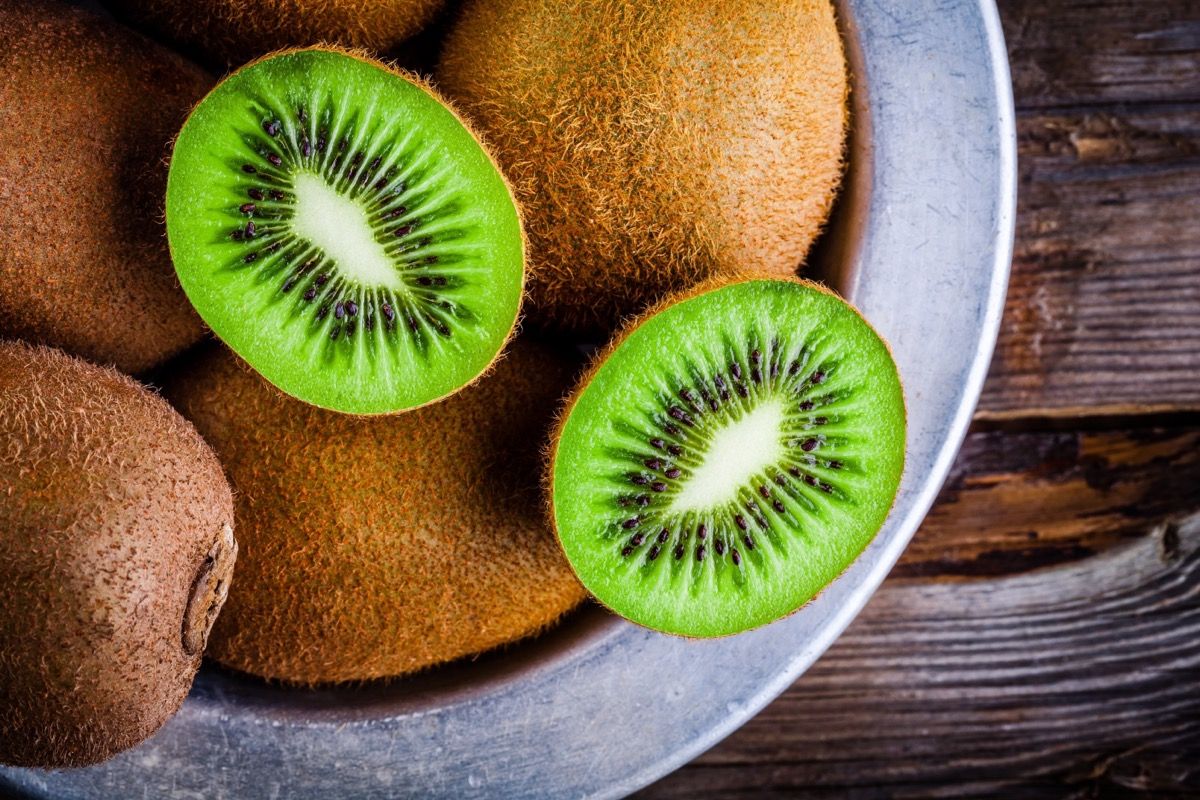
Kiwi may not be the most common fruit on display at your grocery store, but gastroenterologists love it as a food that’ll help you poop quickly.
Joseph Salhab, MD, a gastroenterologist who posts on TikTok under the handle @thestomachdoc, says he eats two kiwifruits in the morning. Like figs, this type of fruit “packs a ton of fiber” but also has a lot of vitamin C and digestive enzymes, he notes.
In fact, a 2023 study published in The American Journal of Gastroenterology (AJG) found that the “consumption of 2 green kiwifruits daily improves constipation and abdominal comfort.”
Salhab does point out that some people are allergic to kiwi. In this case, he recommends papaya, which “also packs a lot of fiber and has digestive enzymes in it to help with acid reflux and to help with bloating.” Another option, he says, is dragon fruit.
3
Drink lots of water.
“Of course, you need to be properly hydrated…to keep things moving,” says Bowring. When you don’t drink enough water, your stools can become dry and hard, which makes them difficult to pass.
According to the U.S. National Academies of Sciences, Engineering, and Medicine, as cited by Mayo Clinic, men should consume about 15.5 cups of fluids a day and women 11.5 cups. “About 20 percent of daily fluid intake usually comes from food and the rest from drinks,” the experts explain.
In addition to hydrating yourself, you can avoid things that dehydrate you, such as caffeinated drinks, sugary beverages, and alcohol, per Cleveland Clinic.
RELATED: Doctor Reveals Why You Have to Poop Right After Eating—And What to Do About It.
4
Put olive oil in your coffee.

Drinking coffee is perhaps one of the most common ways people get their bowels moving. This is backed up by science, including a 2022 study published in the journal Nutrients that reported coffee stimulates both gastric secretions and the colon. But Bowring has a trick to make this work even better: Add olive oil to your morning cup of Joe.
A 2021 study published in the Journal of Pediatric Surgery showed that olive oil was effective in relieving constipation, but the trend of putting it in coffee took off a couple of years ago when Starbucks introduced its “Oleato” coffees, which all contain olive oil.
In a separate TikTok video, Bowring cites another study that showed “women who incorporate just one tablespoon of olive oil into their breakfast experienced greater fat loss and a significant decrease in blood pressure compared to those who did not.”
“This remarkable outcome can be attributed to the presence of polyphenols in olive oil, which effectively reduce inflammation in the GI tract and promote the growth of beneficial bacteria,” she explains.
For all of these benefits, she suggests adding one tablespoon of olive oil to your morning coffee.
5
Have a hot beverage as soon as you wake up.
If you’re not a coffee drinker, any hot beverage, even plain water, can help relieve constipation, says general surgeon Karan Rajan, who adds that it’s best to drink this as soon as you wake up.
On TikTok, where he posts under the popular account @dr.karanr, Rajan explains that “this triggers the gastrocolic reflex.”
According to research published by the National Library of Medicine, “The gastrocolic reflex is a physiological reflex that controls the motility of the lower gastrointestinal tract following a meal,” which then increases motility in the colon in response to the stretching of the stomach.
More simply put, when the stomach stretches with food or drink, “the body releases a bunch of hormones to make your colon contract,” and thus help you poop, Rajan explains.
Acupuncturist and physical therapist Eileen Li shares on her TikTok channel (@anew.acu) that putting a pinch of salt in your hot water can help your body retain more fluids and will also lubricate your intestines.
6
Use a “stool stool” when on the toilet.
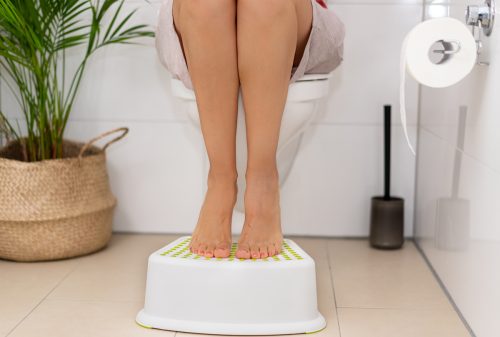
According to Avery Zenker, a registered dietitian who writes for EverFlex Fitness, this object is a “stool that supports your feet a bit higher while you sit, so your position on the toilet may be more anatomically supportive of having a bowel movement.”
She explains that tall toilets position our bodies so that it’s difficult for the large intestines to pass a bowel movement.
RELATED: Gastroenterologist Says These 5 Drinks Will Help You Poop Everyday.
7
Take magnesium supplements.

Taking magnesium supplements can be a simple way to regulate your pooping schedule, especially for those who suffer from IBS, which can lower your magnesium levels.
“Magnesium helps to increase the amount of water in your intestines, which can help with bowel movements,” explains the University of Michigan.
You may want to take these supplements before bed, though, as they can make you sleepy.
8
Do a self-massage.
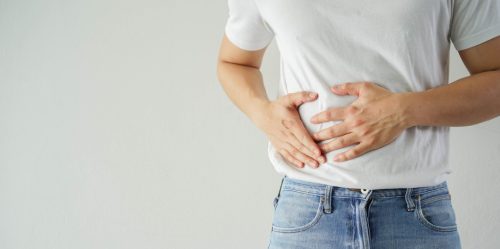
Zenker points out that an “I love you” massage (also known as ILU) is an abdominal massage that you can easily do yourself to get things moving.
“You can start on your left upper [abdomen] quadrant, massaging downward as a letter ‘I.’ Then start at your upper right quadrant, to upper left quadrant, then down, in the ‘L’ shape. Finally, draw a ‘U’ shape from the lower right quadrant up, over, and down,” she breaks down. “This is tracing the shape of movement through the large intestine and can help improve transit time.”
9
Stretch.
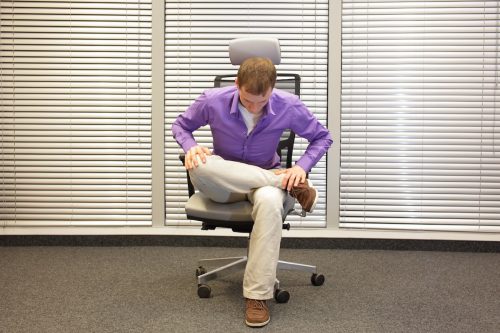
Sometimes, sitting all day can be the culprit of your constipation, as it compresses the nerves that help with bowel movements, explains Bowring in yet another video. This can also happen if you’ve given birth or cycle a lot.
To relieve this compression, she recommends stretching your piriformis muscle, which “runs from your lower spine through your butt to the top of your thighs,” according to Cleveland Clinic.
Bowring demonstrates simply sitting on a chair, crossing your ankle above your opposite knee, and then rocking back and forth.
RELATED: What the Color of Your Poop Means, According to a Gastroenterologist.
10
Get some sunshine in the morning.

Believe it or not, your circadian rhythm—the internal clock that regulates your sleep-wake cycle—can have a profound effect on your digestive system.
In yet another video, Bowring explains how it’s so important to expose yourself to natural light in the morning, whether you’re getting outside or simply sitting near a window.
“The circadian rhythm affects digestive processes, including the timing of bowel movements and the production of digestive enzymes. Disruptions in this rhythm can lead to digestive issues such as constipation or irregular bowel movements,” explains FoodGuides.com.
11
Practice deep breathing.
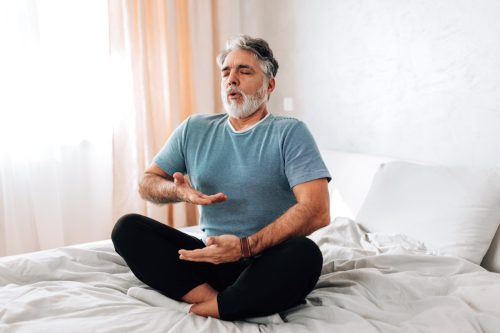
Believe it or not, simply paying attention to your breathing can also help you poop instantly.
“Deep breathing helps us stimulate our parasympathetic system, helping us get into more of a ‘rest and digest’ state,” explains Zenker. “This signals our body to focus more on the digestive system, keeping things moving, allocating blood flow, and relaxing so you can have a healthy bowel movement.”
12
Go for a walk.

Sometimes all it takes to get things moving is to get yourself moving. Zenker notes that light exercise, even just a short walk, can help relieve constipation by stimulating the bowels.
Harvard Medical School writes that the colon responds to physical activity. They also explain that overall muscle tone helps with regular bowel movements: “The abdominal wall muscles and the diaphragm all play a crucial role in the process of defecation. If these muscles are weak, they’re not going to be able to do the job as well.”
RELATED: Doctor Shares What Happens If You Hold Your Poop.
Other things to remember when you can’t poop.
It’s important to remember that these are merely suggestions for foods, beverages, and activities that can help move things through your GI tract.
If you’re struggling with constipation, diarrhea, or any other issue related to your bowel movements, speaking to your healthcare provider should always be your first course of action. Certain medications and supplements can cause constipation, as can underlying health issues such as irritable bowel syndrome (IBS) or diabetes.
- Source: https://my.clevelandclinic.org/health/diseases/4059-constipation
- Source: https://journals.lww.com/ajg/fulltext/2023/06000/consumption_of_2_green_kiwifruits_daily_improves.26.aspx
- Source: https://www.mayoclinic.org/healthy-lifestyle/nutrition-and-healthy-eating/in-depth/water/art-20044256
- Source: https://www.ncbi.nlm.nih.gov/pmc/articles/PMC8778943/
- Source: https://www.jpedsurg.org/article/S0022-3468%2821%2900258-X/fulltext
- Source: https://pubmed.ncbi.nlm.nih.gov/28808791/
- Source: https://www.ncbi.nlm.nih.gov/books/NBK549888/
- Source: https://www.med.umich.edu/1libr/MBCP/Magnesium.pdf
- Source: https://my.clevelandclinic.org/health/diseases/23495-piriformis-syndrome