Winter Storm This Weekend Could Leave Hundreds of Thousands Without Power, Meteorologists Warn

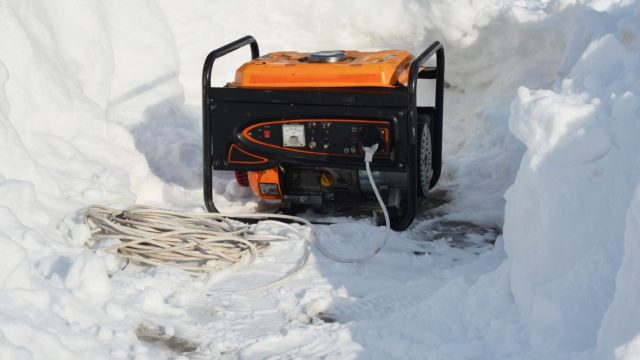
Even though extreme weather can always create issues, it’s a little different during the winter months. Just ask anyone who’s ever had to head to the airport in a winter storm! And now, after a season filled with record-cold temperatures and some very early snowfall, meteorologists are warning that an approaching winter storm could leave hundreds of thousands of people across the U.S. without power this weekend.
RELATED: 4 U.S. Regions Where Winter Storms Are Becoming More Extreme.
A huge section of the U.S. is bracing for a major winter storm.
Right on the heels of a polar vortex-driven cold snap across much of the country, an even more significant winter blast could be on the way. Forecasts now show a major winter storm developing late Thursday into early Friday that will bring rain, ice, and snow to a wide swatch of the U.S., potentially bringing travel to a halt and threatening power grids, per AccuWeather.
The latest weather is the result of another surge of frigid air pushing in from the north, which is expected to bring dangerously low temperatures as much as 30 degrees below seasonal averages, the New York Times reports.
Some parts of the Midwest could even see wind chills bring temperatures as low as -50 degrees Fahrenheit. And while exact levels of snowfall and meteorological effects are still coming into focus, experts are warning that it’s almost assured to be significant.
“We’re highly confident it’s going to be a really impactful event,” Bob Oravec, a meteorologist at the Weather Prediction Center, told the New York Times. “Typically, as we get closer to the event, the finer details do tend to become more certain.”
Which areas will be affected by the winter storm first?
Before the weekend can even kick off, parts of the southern Rockies, Southern Plains, Midwest, and Southeast are expected to see the beginnings of the storm. Places like Colorado, eastern New Mexico, Kansas, northern Oklahoma, Missouri, southern Illinois, northern Arkansas, and western Kentucky could see snowfall ranging from three inches to a foot beginning early Friday (Jan. 24) through Friday evening, per AccuWeather.
To the south that same day, parts of northern Texas, southern Oklahoma, central Arkansas, and southwestern Tennessee could see a mix of rain that changes over to snow and ice. And just further south, a swath running from central Texas to the northern Gulf States could see rain morph into a dangerous ice storm.
The following day, the storm is expected to continue to push eastward and hit states in the Mid-Atlantic and Northeast. Snow is expected from Virginia and north, while a snow and ice mix is expected through the Carolinas and northern Georgia, per AccuWeather.
RELATED: 4 U.S. Regions Where Winters Are Getting Shorter the Fastest.
Major power and travel disruptions could be on the way.
Even some areas farther to the south could see adverse conditions as ice blankets roadways and takes down power lines. As a result, even those staying at home could face a loss of utilities.
“Potentially hundreds of thousands of people may go without electricity and heat for days,” AccuWeather chief meteorologist Jonathan Porter said in a forecast.
Of course, while roads could become impassibly treacherous, things are looking even more grim for those planning on taking to the skies.
“More than 4,000 flight cancellations are likely across the country this weekend,” Porter added.
Forecasts are still coming together.
Even though meteorologists agree this will likely be a memorable winter storm, the exact scope of which areas will see snow versus rain and ice is still coming into focus. This includes many major metropolitan areas that aren’t accustomed to such wintry conditions.
“At the moment, the southern edge of that wintry weather may be northern Louisiana, northern Mississippi, northern Alabama, northern Georgia into South Carolina,” Oravec told The Times. “It could definitely impact a lot of big cities in the South, especially Memphis, over to Atlanta, Raleigh, as well as Dallas, Oklahoma City, [and] Little Rock.”
Meanwhile, the last cities to catch the brunt of the storm will likely be closer to the coast, as places like Boston, Philadelphia, Baltimore, and New York City get snow and ice conditions on Sunday.