Is Retatrutide Poised to Overtake Ozempic as the Hottest Weight-Loss Drug?

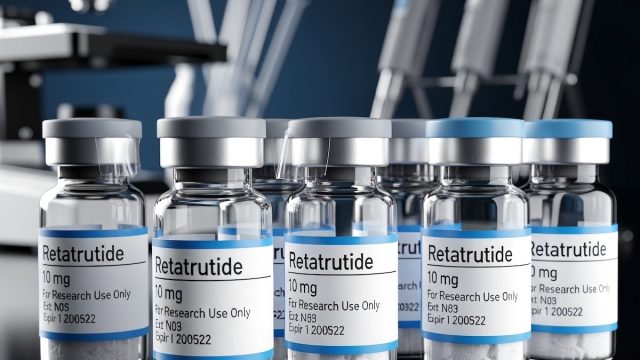
For years, Ozempic and similar GLP-1 medications have dominated the weight loss conversation—but a new “game changer” drug from Eli Lilly may soon shift the landscape. In a newly-announced Phase 3 clinical trial, the triple receptor agonist drug retatrutide delivered some of the most dramatic weight loss results seen to date. Its use also came with an unexpected bonus: Meaningful relief from knee osteoarthritis pain.
RELATED: The No. 1 Ozempic Side Effect “Nobody Warns About.”
In the 68-week trial, adults with obesity and knee osteoarthritis who took the highest dose of retatrutide (12 mg) lost an average of 28.7 percent of their body weight, or about 71 pounds. By comparison, most approved GLP-1 drugs, including semaglutide, the active ingredient in Ozempic and Wegovy, typically produce average weight loss of 10 to 15 percent.
What makes retatrutide different is how it works. While Ozempic targets a single hormone pathway (GLP-1), retatrutide activates three receptors: GLP-1, GIP, and glucagon. This broader hormonal approach may help explain its outsized effects on weight loss and metabolism.
An Eli Lilly press release emphasizes that the benefits go beyond weight loss. Participants taking retatrutide also reported substantial reductions in knee pain of roughly 75 percent, as well as improved physical function. Notably, more than one in eight patients became completely pain-free by the end of the trial—an outcome that could be life-changing for people whose excess weight limits mobility and daily activity.
The drug also showed improvements in cardiovascular risk markers, including cholesterol, triglycerides, inflammation levels, and blood pressure. At the highest dose, systolic blood pressure fell by an average of 14 mmHg, a meaningful drop from a heart-health perspective.
RELATED: Doctors Warn That Drugs Like Ozempic Are Making You “Skinny Fat.”
As with other incretin-based drugs—those that mimic the body’s natural incretin hormones to increase insulin and reduce appetite—use of retatrutide produced several side effects, including nausea, diarrhea, vomiting, and constipation. Discontinuation rates due to side effects were higher at the top dose but remained comparable to what’s been seen with other powerful weight loss medications.
While the once-weekly jab appears to be the most effective weight loss drug yet, it’s important to note that retatrutide is not yet FDA-approved—and it has not yet been compared to drugs like Ozempic or Mounjaro in clinical settings. However, with seven additional Phase 3 trials expected to wrap up in 2026, experts believe it could soon become a major option for people with significant weight loss needs—especially those managing obesity-related joint pain.
If approved, retatrutide may not just rival Ozempic—it could redefine what’s possible in medical weight loss. However, ABC News reports that it could take months, if not years, to see the high-performing product in pharmacies.