Brutal Winter Could Leave Your Lawn With Dead Patches This Spring

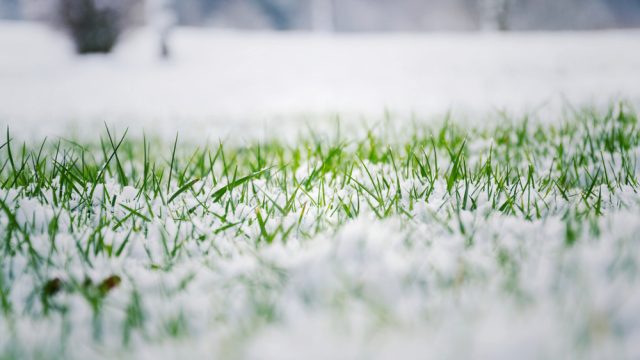
With meteorological spring still weeks away, many Americans are wondering when this brutal winter will finally end. The frigid temperatures and back-to-back snowstorms have taken a toll on even the most experienced winter warriors. But there’s one thing that’s likely been taking an even worse beating: Your grass. And with the harsh season we’ve had, there’s a chance winter weather has damaged lawns in your area this year.
RELATED: 3 U.S. Regions Where Winter Will End the Earliest This Year.
Major storms played a factor in lawn damage.
One of the most obvious culprits is the major snowstorm that blasted a huge swath of the country in late January, with snow and freezing rain knocking out power for tens of millions. The storm is believed to have caused upwards of $6.7 billion in privately insured losses, Reuters reported. In total, claims were filed across 30 states, ranging from New Mexico through the Northeast.
However, some of the damage may only become apparent as lawns across the U.S. emerge from hibernation. Issues like snow mold, suffocation, and trampling can damage and kill grass, according to The Spruce. And of course, heavy snow and freezing rain can settle on the branches of shrubs and trees, weighing them down and causing them to break or fall.
Weather pattern changes can also damage your lawn.
While much of the U.S. has seen sustained cold temperatures, other regions have seen quick warm spells breaking up the frigid weather. This has been especially true in places like the Southeast and in Florida, where record-cold temperatures brought some areas below freezing.
While it’s nice to have some breaks from the cold, it can also wreak havoc on your lawn. Experts warn that issues like frost and extended cold can create major issues.
“Repeated freezing and thawing can damage grass at a cellular level, while cold temperatures limit water absorption by the roots, leading to dehydration,” Tom Clamp, head of technical at lawncare company Pelsis Doff, recently told Tom’s Guide.
There are also other conditions: “Winter winds can dry out grass further, and cold weather also reduces the nutrients available in the soil,” Clamp explained.
Unfortunately, there’s already evidence that people will have to deal with the fallout in the spring. In December, experts in the Dallas-Fort Worth area warned that this was already a reported issue in Texas this year due to fluctuating temperatures.
As the snow recedes and your lawn becomes active again, you might notice dead patches as a result of the strain winter put on it.
According to the Iowa State University Extension, it’s best to reseed any bare patches in early spring once temperatures are consistently above 45 degrees Fahrenheit. You can also start applying about 1 inch of water over the course of a week to try and spur regrowth.
RELATED: 4 Trees and Shrubs You Should Not Prune Until Spring.
Rodents can also be an issue.
That fresh snowfall might look nice on your lawn, but beneath the surface, some unwanted visitors could be damaging it.
According to the University of Illinois Extension, vole damage is common during winter months, as snow cover protects them from predators. The burrowing rodents make pathways beneath the snow while they feed on grass blades and their roots.
This tends to result in winding paths and lines of dead grass through your lawn. And while there’s very little you can do to remove snow from covering your grass, the Extension suggests reseeding any vole-damaged areas that don’t sufficiently grow back.