9 Best Shoes for Back Pain, Podiatrists Say


Back pain is a common condition—so common, in fact, that it affects nearly 40 percent of American adults, according to the Centers for Disease Control and Prevention (CDC). A condition with a range of underlying causes, it can also require a range of treatments. However, not all cases of back pain are serious or require major interventions, such as medication or surgery. In some instances, making minor lifestyle changes—including to the shoes you wear—can set you on the path toward healing.
If you’re wondering which specific shoes might alleviate your back pain, the best person to consult is your doctor, ideally a podiatrist, orthopedist, or physiatrist. They can help you determine your body’s specific needs and find just the right pair of shoes to get your spine into optimal alignment.
That said, there are a few key qualities you should look for in any shoe if you have back pain—as well as a few doctor-approved brands that are most likely to relieve your symptoms. Read on to learn the nine best shoes for back pain, according to podiatry experts.
RELATED: Never Wear These 3 Kinds of Shoes If You Have Back Pain, Experts Warn.
Understanding the Importance of Proper Footwear
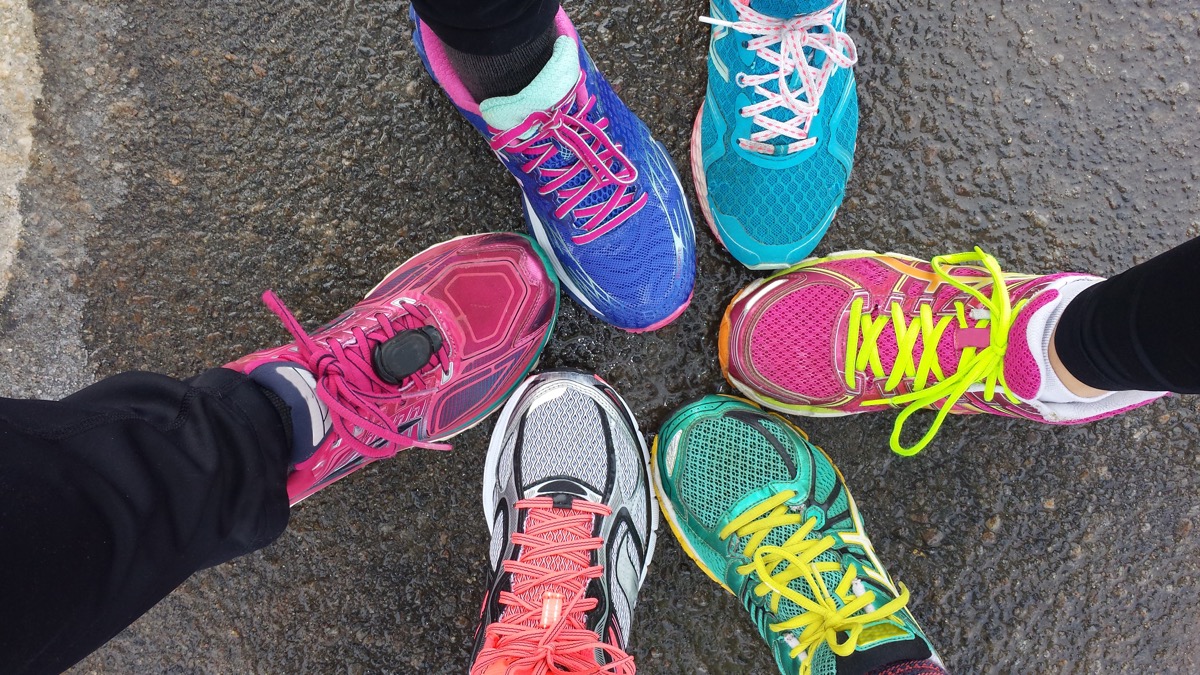
The shoes you wear play a crucial role in supporting your entire body, but particularly your knees and back. Improper footwear can exacerbate existing back pain or even cause new problems.
“When choosing the most appropriate footwear, you want to understand how your feet work, as your feet are the foundation to your body,” says Patrick McEneaney, DPM, founder and CEO of Northern Illinois Foot & Ankle Specialists. “Are your arches low, medium, or high? Are you someone that over pronates (foot rolling inward) or someone that over supinates (foot rolling outward)?” he notes.
McEneaney adds that when your feet are out of alignment or are not functioning normally, this can affect your gait and “cause you to compensate by putting stress on other joints, including the back.” He notes that this can create a cycle of increased joint pain and unstable movement, ultimately contributing to more back pain and a higher risk of injury.
People with underlying pain, inflammation, stiffness, or other symptoms that can affect gait could also worsen the cycle.
For instance, “arthritis causes limitation of motion, forcing your body to get the motion from other joints. Other conditions that will affect how you walk would be muscle weakness, tendonitis, joint instability, bunions, hammertoes, or other bony deformities,” McEneaney explains.
The good news is that most abnormalities can be addressed with the help of the right shoe.
RELATED: 5 Best Shoes for Flat Feet, Podiatrists Say.
Here’s What to Look For in a Shoe

When selecting athletic shoes, it’s essential to consider factors such as cushioning, arch support, and stability. Cushioning helps absorb the impact of each step, reducing the stress on your back. Arch support ensures that your foot is properly aligned, which can prevent undue strain on your back. Stability features, such as a firm heel counter and a supportive midsole, help keep your foot from rolling inward or outward, which can lead to lower back pain.
You should always ensure that your shoes fit well, especially if you regularly experience back pain. A poorly fitting shoe can exacerbate back pain by causing misalignments in the spine and neck and even reduce your range of motion.
“The shoe fit is important. You want to make sure that the shoe is not too tight, too loose, too long, or too short. A full thumbnail of toe space from the end of the longest toe to the end of the shoe indicates proper length,” says McEneaney.
Also, keep in mind that no single footwear choice is right for all activities. Changing your shoe selection based on what you plan on doing on any given day can help you avoid causing additional strain on your back.
“Running shoes are used for running or walking as they offer ample cushioning, support, and shock absorption. The shock absorption can decrease the stress from the ground that goes into joints like the knee, hip, and back. Tennis shoes offer more side-to-side support to improve stability on the court,” McEneaney tells Best Life.
Regardless of what type of sneaker you get, experts typically recommend swapping them for a new pair after 300-500 miles of use—which means it’s important to keep track of your shoes’ mileage as you go.
RELATED: 5 Best Shoes for Knee Pain, Podiatrists Say.
9 Best Shoes for Back Pain
Michael Fishkin, CPed, a certified pedorthist for Northern Illinois Foot & Ankle Specialists, specializes in patient evaluation and the design, fabrication, modification, and retrofitting of shoes to add pedorthic devices. He says there are several shoe brands that offer relief for people suffering from back pain.
Brooks Adrenaline GTS 23, Glycerine GTS 21, and Ghost Max
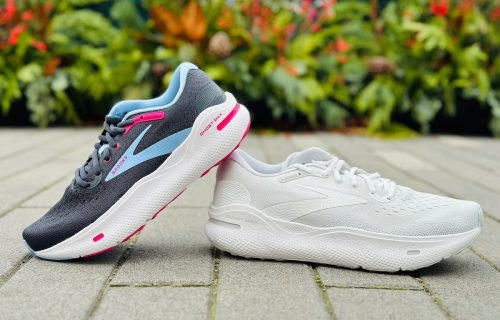
For those with back pain, Fishkin recommends three popular athletic sneakers from Brooks: the Adrenaline GTS 23, the Glycerin GTS 20, and the Ghost Max. These are highly stable running shoes with good arch support, cushioning for impact absorption, and reliable quality, he says.
ASICS Cumulus, Nimbus, and Kayano
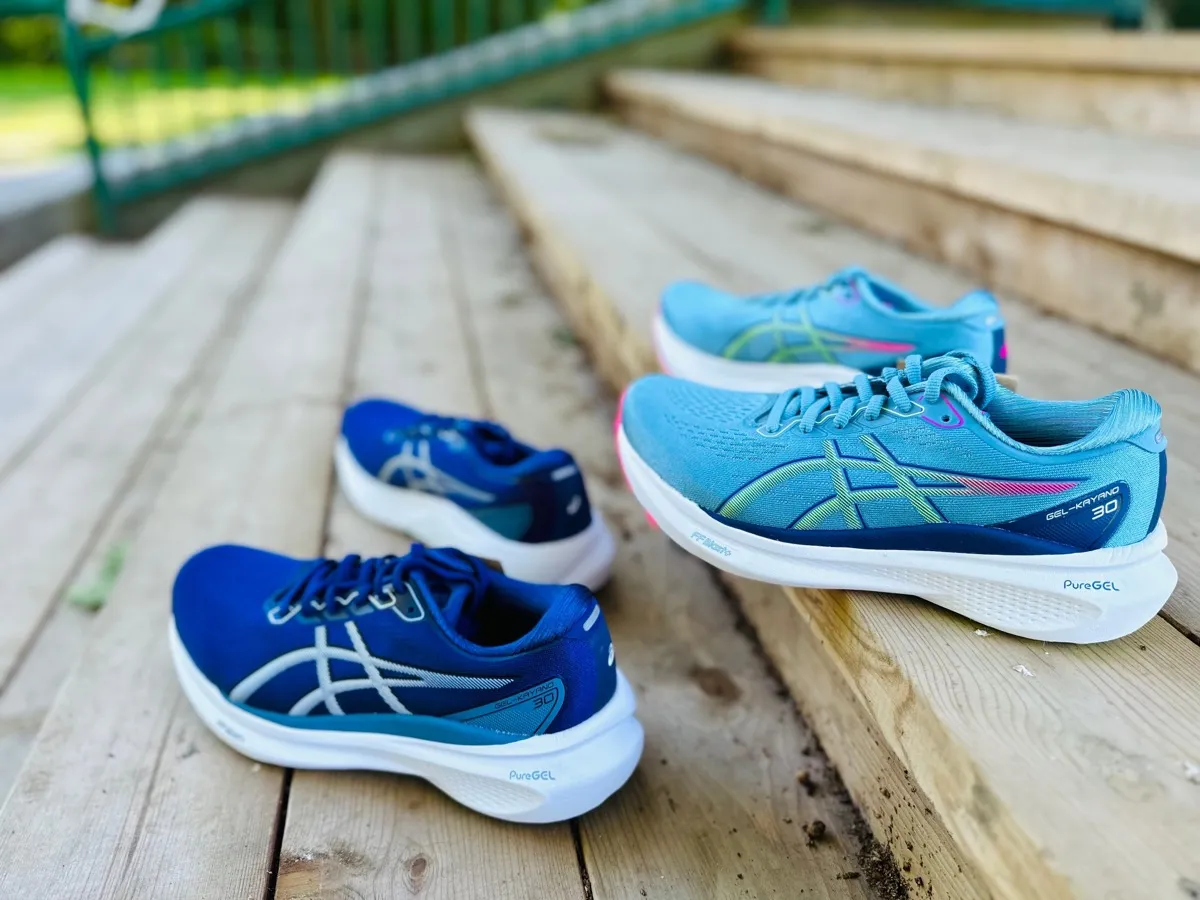
Next, Fishkin recommends three shoes from ASICS: Gel Cumulus, a high cushion neutral running shoe; Gel Nimbus, a cushion neutral running shoe; and Gel Kayano, a stability running shoe. All three can help lower back pain by encouraging a natural gait, and reducing heel shock for optimal comfort.
New Balance 1080, 880, and 860
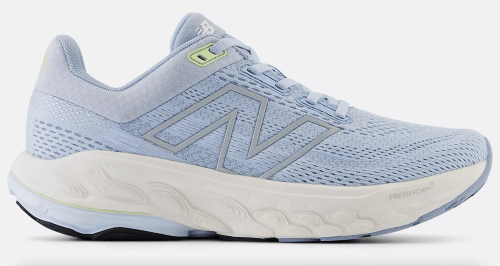
Finally, the pedorthist says that three New Balance models can help improve your symptoms of back pain and prevent further injury: the 1080, 880, and 860. These lightweight shoes can help reduce strain and pressure on the lower back while fighting against overpronation.
RELATED: 5 Best Shoes for Plantar Fasciitis, Podiatrists Say.
Ask Your Doctor About Custom Orthotics
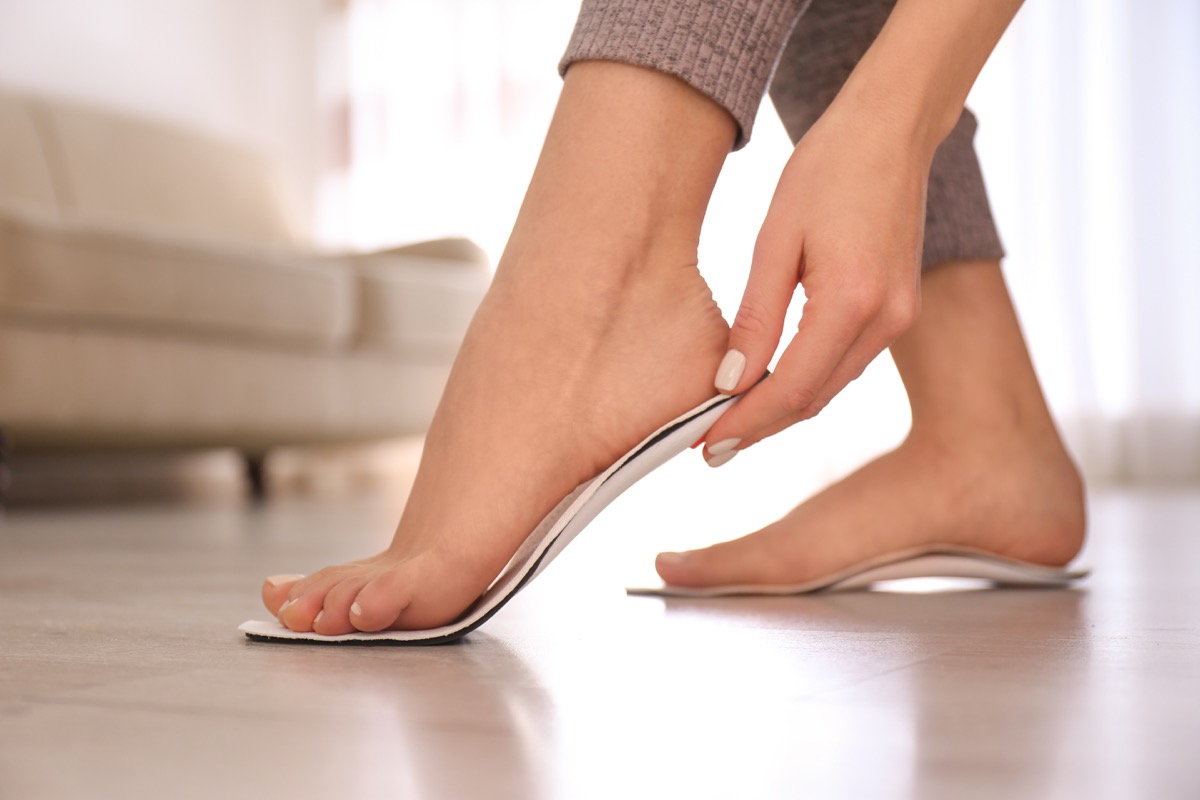
Even once you’ve found the right shoe to minimize back pain, there’s still room for more customization. McEneaney recommends asking your podiatrist about custom orthotics.
“Shock absorbency reduces the ground reactive forces,” he says. “Custom orthotics can also go a long way to limit stress on the spine by realigning the way we run or walk and help with shock absorbency, controlling excessive motion and help redistribute weight.”
- Source: CDC: Back Pain Statistics