Doctors Share 10 Ways You’re Silently Damaging Your Knees


As you grow older, taking care of your knees becomes ever more essential for staying active and independent. That’s because these hardworking joints support you through every step, squat, and stair climb, keeping you moving with ease and confidence. Unfortunately, all too often, poor everyday habits get in the way of full knee function.
The good news? Whether it’s through gentle exercise or simply listening to your body when it needs rest, you can protect your knee health and avoid common triggers for strain and injury. Ready to flex a new muscle by replacing old habits? These are the nine worst things you’re doing to your knees, according to doctors in the know.
RELATED: 7 Worst Shoes for Knee Pain, Podiatrists Say.
1
Sitting for long periods

Leading a sedentary lifestyle—one in which you sit for long periods and get little exercise in between—can have a broad effect on your health. In fact, experts say it can increase your risk of heart disease, stroke, certain types of cancer, mental health disorders, and more.
Additionally, Anthony Giuffrida, MD, a board-certified interventional pain and spine physician working with Cantor Spine Center in Fort Lauderdale, Florida, says it can also take a toll on your knees.
“A lot of people don’t realize that sitting for hours makes your knees stiff and your leg muscles weaker,” Giuffrida tells Best Life. “When those muscles aren’t strong enough, your knees have to do more work, and that can cause pain. I always tell people to get up once an hour, stretch, or take a short walk.”
2
Not warming up before working out

Exercise may be crucial for maintaining your musculoskeletal health, but the experts say it’s important always to warm up first if you aim to avoid knee pain.
“Going straight into a workout without warming up is rough on your knees,” says Giuffrida. “Your muscles and ligaments need a few minutes to loosen up, or you’re more likely to get hurt. Just five minutes of easy stretching or light movement really helps.”
RELATED: 10 Best Exercises for Knee Pain, According to Fitness Experts.
3
Working out in the wrong shoes
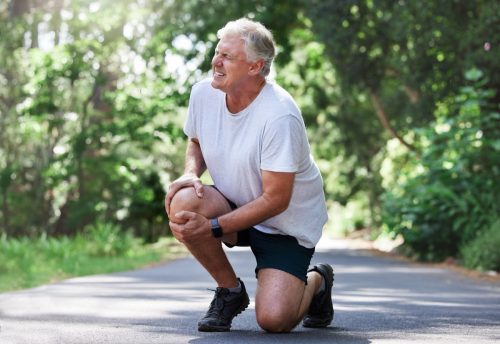
Your shoe selection can also play a significant role in your knee health.
“Old sneakers or shoes with poor support can mess with how your knees align. That extra pressure adds up every time you take a step,” says Giuffrida. “I recommend that my patients replace their shoes regularly and pick ones that support their feet and cushion their joints.”
Nicole G. Freels, FACPM, C.Ped, a double board-certified podiatrist and the CEO and Founder at Modern Podiatrist, says that in particular, it’s important to pay attention to a sneaker’s heel drop—the difference between the height of your shoe’s heel and the height of its forefoot.
She notes that many newer athletic shoe brands, including OnCloud, Nike, Brooks, and Hoka, have a heel drop that’s better for working out.
“When doing lower body weight lifting, it’s imperative that you have a zero to negative heel drop,” Freels says. “The reason is that you are not level when you squat or lunge. This puts unnecessary pressure on the anterior portion of the knee and abnormally denudes (wears away) the cartilage over time. This also forces you to hyper-extend your lower back, creating lordosis, which intensifies any lower back issues.”
4
Wearing flip flops.
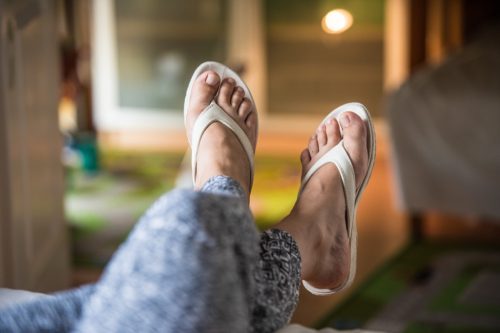
When choosing your day-to-day footwear, Freels says there’s one shoe type you should always avoid if you suffer from knee problems: “Flip flops are the devil!”
When you wear flip flops, your toes usually curl and grip to keep them on. This strains the muscles in the feet and lower legs.
“In doing so, the foot functions in an inverted position, increasing weight to the outside of the foot. This, in turn, externally rotates the knee and the hip,” Freels explains.
Over time, you can expect lateral knee pain, as well as foot and ankle problems, due to the abnormal positioning while walking.
RELATED: Ozempic Reduces Knee Pain by 50 Percent, New Study Finds.
5
Doing high-impact workouts.
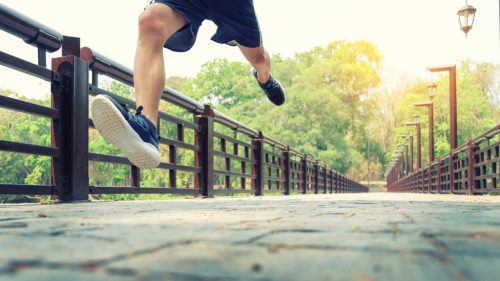
The type of exercise you choose can also cause wear and tear on your knees. People with pre-existing knee conditions should avoid workouts that require excessive pivoting—think basketball, tennis, or football.
“High-impact workouts, such as running or jumping, can be tough on your knees—especially if you don’t give your body time to rest,” warns Giuffrida. “Mixing in swimming, biking, or walking can help keep your knees healthier long term.”
6
Carrying extra bodyweight.

Maintaining a healthy body weight can lower your risk of heart disease, type 2 diabetes, and certain cancer types. It can also reduce your risk of injury to the knees and other joints.
“Extra weight puts more stress on your knees every single day. Even losing a small amount can take a lot of pressure off the joint and really help with pain over time,” urges Giuffrida.
RELATED: 5 Best Shoes for Knee Pain, Podiatrists Say.
7
Having poor posture.
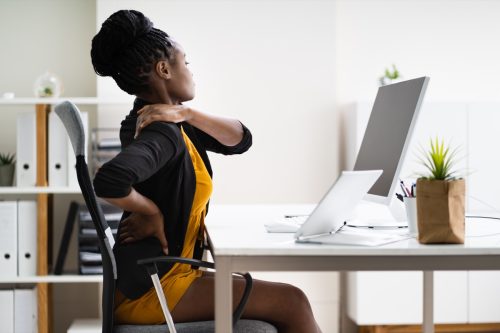
Whether you’re standing, sitting, or walking, having poor posture is also among the worst things you’re doing to your knees.
“Try to keep a slight bend in your knees when you stand and pay attention to how you’re moving during the day,” Giuffrida suggests.
8
Skipping leg day at the gym.

Building muscle in your legs and core can help fortify your knee joints and prevent injury. That’s why, by skipping leg day at the gym, you’re putting your knees at risk.
“Your hips and thigh muscles help protect your knees,” explains Giuffrida. “If they’re weak, your knees have to work harder to keep you stable. Doing simple exercises like leg lifts or squats can help build that strength and take the pressure off your joints.”
RELATED: Cortisone Shots Could Be Making Your Knee Arthritis Worse, Doctors Warn.
9
Forgetting to stretch.
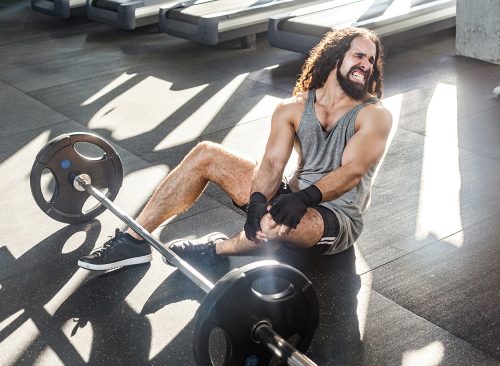
It should come as no surprise that stretching is an important means of protecting the knee joints. However, Freels emphasizes that it’s crucial to stretch not only the knee area but also the hips, ankles, and other surrounding muscles.
“Most people don’t realize that equinus at the ankle creates issues proximally to the knee and hip. If you don’t have adequate range of motion at the ankle joint, then the knee and hip have to compensate by using their hip flexors longer throughout the timing of the gait cycle,” she explains. “Over time, the knee begins to contract and you’re not able to fully extend it,” the podiatrist adds.
10
Eating pro-inflammatory foods.

Following an anti-inflammatory diet can also help minimize knee problems and reduce your risk of arthritis.
While there’s no set regimen you need to follow, and no one food you need to cut out entirely, experts from Johns Hopkins Medicine recommend limiting red and processed meats, deep-fried foods, added sugars, as well as bread, pasta, and pre-packaged baked goods.
Instead, emphasize fresh fruits and vegetables, lean protein, and plenty of healthy fats, including Omega-3s. Integrating gut-healthy foods—think whole grains, probiotic yogurts, legumes, and fermented items like sauerkraut or kimchi—can also benefit your joint health long term.