2 Meteor Showers Will Collide Tonight, Could Bring 30 Shooting Stars an Hour

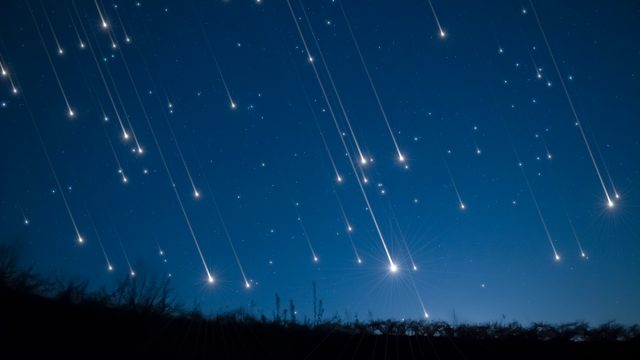
Summertime offers plenty of opportunities to connect more deeply with nature, but its hard to think of an activity more fitting for the season than catching a meteor show—er. Not only is it the time of year when some of the most active and exciting cosmic firework shows fill the calendar, but the balmy nights make it even easier to get outdoors and spend some time gazing into the heavens—without even needing a telescope to do so.
And if you’re hoping to catch a glimpse yourself, this week might be one of your best chances as two meteor showers will collide, bringing dozens of shooting stars per hour tonight.
RELATED: 8 Amazing Things You Can See in the Night Sky Without a Telescope.
Conditions this year favor the Southern Delta Aquariids.
The Southern Delta Aquariids aren’t exactly a household name when it comes to meteor showers. Scientists believe the understated annual event is caused by the Earth passing through the dust trail of comet 96P/Machholz, which completes relatively quick orbits around the sun roughly twice a decade, per NASA.
This year, the “shooting stars” produced as part of this shower have been visible since July 18 and will continue through Aug. 12.
Typically, hopeful viewers can expect to see seven to eight meteors per hour during their peak—if conditions are right. As relatively faint meteors, there needs to be little to no light interference from the moon for them to be visible at all.
Fortunately, there are two favorable scenarios in this year’s lunar calendar. Not only will the meteor shower arrive as the moon will be just 27 percent full in the sky, but the moon will also set before the shower’s radiant point reaches its highest point in the sky for ideal viewing.
They’re overlapping with the Alpha Capricornids.
But the Southern Delta Aquariids aren’t the only show in town: Amateur astronomers are also getting a bonus meteor shower this week with the Alpha Capricornids, which are peaking at the same time overnight this evening.
This show is created by the trail left behind by Comet 169P/NEAT, an object approximately half the size of 96P/Machholz that completes a full orbit just over every four years, according to LiveScience.
Similar to their coinciding counterparts, this shower produces relatively few visible meteors with an average of about five to 10 per hour. However, they do tend to be a little more spectacular a sight by comparison.
“When they do show up, they are these sort of slow fireballs across the sky,” Nick Moskovitz, a planetary astronomer with the Lowell Observatory in Arizona, told NPR. “So if you are looking for that one spectacular event to happen during a watch session, an Alpha Capricornid may be the one that gets you the most excited.”
RELATED: Is an Asteroid Really Hitting Earth in 2032? Scientists Set the Record Straight.
You might have to stay up late for the best viewing.
While the two meteor showers might not stand out as the most spectacular of the season on their own, their combined peak overnight on July 29 makes it a noteworthy night for stargazing. According to Moskovitz, viewers can expect about 20 to 30 meteors per hour.
So, when should you set up your blanket or lawn chair for the best results? Because the Southern Delta Aquariids’ radiant point (or the section of the sky from which they appear to originate) in the constellation Aquarius will slowly creep up higher into the sky overnight, it won’t be until after midnight but before sunrise that it’s high enough in the sky to produce the maximum number of visible meteors, according to the American Meteor Society.
If you’re hoping for some memorable “shooting star” sightings, this cosmic confluence might actually be your best bet. That’s because the summer’s best-known and most active shower, the Perseids, doesn’t line up well with the lunar calendar.
“The glare of the moon is really a killer, and that is just going to make the Perseids not all that compelling this year,” Moskovitz told NPR, adding that the nearly full orb “just ruins the ability to see all of those meteors.”
Here are some tips for watching the overlapping showers.
Besides hoping for clear skies in your local weather forecast this week, there are still a few things you can control that make the viewing experience even better. As with any stellar event, it’s best to get away from cities and street lights to an area with the darkest skies possible, according to NASA.
Warmer summer weather makes it a little easier to get comfortable, but you’ll still want to make sure you bring a blanket, comfy clothing, folding chairs, or a sleeping bag to ensure you can lie back and take it all in. And because of their orientation in the sky above, you might want to consider setting up somewhere with a decent view of the southern section of the night sky. Once you’re there, kick back and try to resist the temptation to scroll.
“Put your cellphone down,” Moskovitz told NPR. “Turn that screen off and let your eyes adjust to the dark.”