The #1 Lawn Alternative to Plant This Spring for a Bloom-Filled, No-Mow Yard


Even though there are many types of grass out there you can choose for your lawn, they all have one thing in common: You’re going to need a lawnmower to keep it in check. However, there’s good news for home gardeners looking for something low-maintenance—not to mention a great way to change up the look of your yard overall. If you’re ready to say bye to grass for the most part, expert gardeners say that creeping thyme can be the ideal swap-in for saving time (no pun intended) and energy on all that regular trimming. Here’s what you need to know about the top lawn alternative to plant this spring for a bloom-filled, no-mow yard.
RELATED: 15 Best Spring Flowers to Plant for a Beautiful, Blooming Garden.
Creeping thyme is an excellent grass alternative.
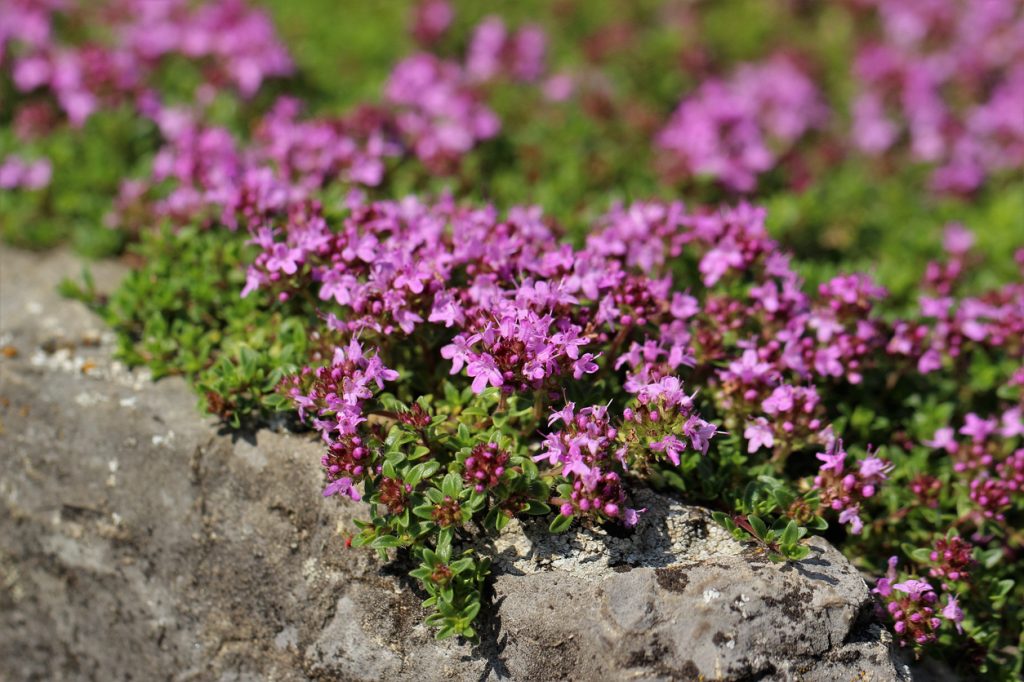
The go-to for ground cover might typically be grass, but gardeners know it’s far from the only option. In a recent post to Instagram, @housekeeping_101 points out that creeping thyme (or wild thyme) can be a fantastic replacement.
According to the author, the sprawling plant (whose scientific name is Thymus serpyllum) can not only add a pop of color to your lawn, but also bring a pleasant fragrance as it blooms throughout most of the year.
Besides not having to bust out that lawnmower nearly as often, there are plenty of good reasons to consider swapping in this sprawling herb for grass. According to The Spruce, creeping thyme is perennial in moderate climates and grows low like a ground vine that removes the requirement for mowing.
And that’s not the only reduction in yardwork: The plant can help choke out weeds and is relatively drought-resistant and deer-resistant. It can also be a solution for some turf where grass struggles, including sandy or gravelly soil.
RELATED: 6 Ways to Make Your Lawn Maintenance-Free.
How to plant creeping thyme:
Ready to replace your lawn? Before you get started, it’s important to note that while Thymus serpyllum is incredibly hardy, it thrives in USDA Zones Four through Nine, according to the Farmer’s Almanac. If you’re going for a large area, keep in mind that you’ll also need at least one plant for every square foot of coverage.
As with many spring plantings, you should wait for the last frost date to pass before getting to work. This time before temperatures rise and the sun becomes warmer will give it time to establish itself in your yard.
Make sure you remove any grasses in the area you’re hoping to cover, loosen the soil, add about an inch layer of compost, and place the plants in a shallow hole before watering thoroughly. From then on, you’ll only have to water them every 10 days or so amid normal weather conditions, per The Spruce.
Not ready to get rid of all of your grass just yet? Creeping thyme is also the perfect add-on to rockier areas where other plants struggle, and can be a great way to line your garden paths with pops of color.
RELATED: 6 Flowers You Should Never Plant in the Spring.
A few limitations to keep in mind.
Gardeners love thyme for its ability to take in full sun and survive most conditions. However, it’s important to note that high humidity or poor drainage are two things the plant can’t stand, according to Farmer’s Almanac.
Impatient planters should also beware. While Thymus serpyllum will fill out ground area over time, it may take a season or two for them to really hit their stride and growing potential.
And if you’re the type who needs to “touch grass” regularly during the warmer months, you might also want to take note: While creeping thyme can take the occasional footprint, it won’t last in heavy traffic areas.