Surging Flu Strain Is Making Older People Sicker, Doctors Warn

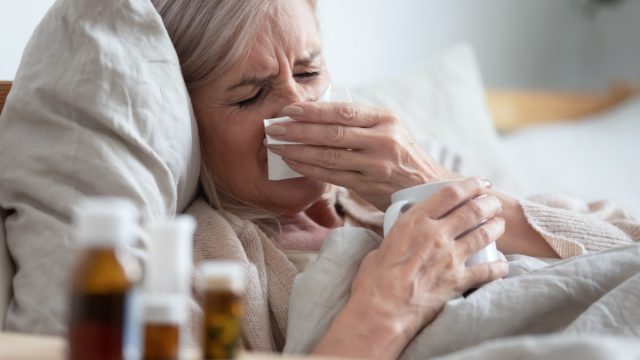
If it seems like everyone around you is down for the count this week, that’s because flu and other respiratory illnesses are indeed on the rise. A new flu strain is propelling a surge in cases across the U.S.—and making older people sicker, some doctors warn.
Every year, the flu mutates to create a new strain, which scientists then work to develop vaccines against. This year’s H3N2 strain is considered an especially harsh variant, associated with an increased risk of severe illness, hospitalization, and death in older populations, The Washington Post recently reported.
RELATED: Flu Levels Are “Very High” and “High” in These 14 States.
A respiratory virus tracker produced and monitored by the Centers for Disease Control and Prevention (CDC) reveals an especially severe spike in flu, Covid, and RSV risk this week: “As of January 5, 2026, the amount of acute respiratory illness causing people to seek health care is at a very high level for the first time in the current 2025-2026 season,” the health authority writes.
Some states have experienced a particularly alarming increase in flu cases over recent weeks. For instance, in the week ending December 20, New York disclosed a record-breaking number of flu cases in a single week with 72,133 infections, ABC News reported.
Making matters worse, many experts say that U.S. drugmakers finalized their flu shot formulations before the newest strain emerged—meaning they could be less effective in protecting the public.
The good news? Experts say that while the threat is certainly trending upward, it’s not entirely unexpected. “It seems to be a bit of a swift increase, but it’s not atypical,” Jennifer Nuzzo, DrPH, an epidemiologist and director of the Pandemic Center at the Brown University School of Public Health, told The Washington Post. “We often see flu seasons come in sort of fast and furious.”
With that in mind, you can take many of the same precautions that you would to protect against the flu in any winter season. Frequent hand washing, avoiding touching your face, staying away from people who are visibly sick, sanitizing surfaces, and covering your coughs and sneezes can all help prevent transmission.
RELATED: You Can Get the Nasal Spray Flu Vaccine Delivered to Your House This Year—Here’s How.
Of course, getting your annual flu vaccine is one of the simplest and most effective steps you can take to protect your health—and it’s especially important if you’re over the age of 65. As we age, the immune system naturally weakens, and older adults account for the majority of flu-related hospitalizations and fatalities each year.
Those deterred by this year’s lowered vaccine effectiveness should understand that even an imperfect fit will reduce your risk of severe illness, prevent complications, and shorten recovery time. Beyond protecting yourself, getting vaccinated also helps shield loved ones and others in your community who may be vulnerable.
“The flu vaccine may not prevent you from getting flu, but it certainly will keep you out of the hospital and may just reduce the severity of your symptoms or how long you’re sick for,” Nuzzo said.