The #1 Best Time of Day to Take a Winter Walk, According to Doctors

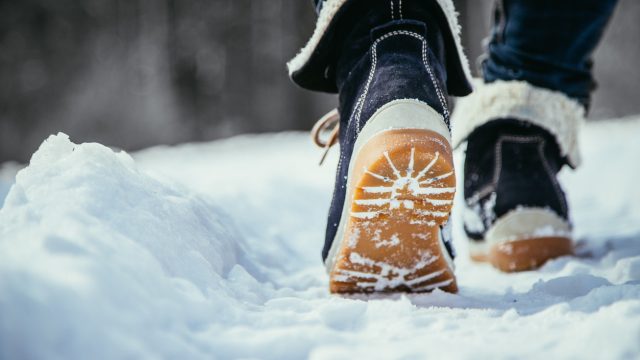
Getting outside and taking a walk can be a fantastic exercise any time of year. But during the winter, taking the effort to bundle up and brave the chillier temperatures can feel like an extra invigorating way to get moving. Of course, working even just a quick scroll into your daily schedule can go a long way towards your long-term health. But if you’re hoping to set yourself up for success, doctors and mounting research say the best time of day to take a winter walk could be in the morning.
RELATED: The No. 1 Exercise for the Strongest Bones, Doctors Say.
Research shows mornings are a great time of day for winter walks.
Everyone’s schedule may be different, but if you were trying to come up with an ideal time to lace up for a winter walk, research shows you might want to shoot for earlier in the day.
Different studies have found multiple benefits to the a.m. amble, including one 2023 study published in the Journal of Physiology that found participants who took earlier walks saw better improvements in their blood sugar levels and blood pressure than their afternoon-walking counterparts.
Meanwhile, a 2024 study published in the Journal of Health Psychology found that getting outdoors and taking in morning sunlight helped improve participants’ sleep quality that night.
But why does the winter walk matter so much? Because apparently, it can be the next best thing to your morning cup of coffee. A study published in the Journal of Environmental Psychology in 2009 found that participants who walked outdoors for 20 minutes versus indoors on a treadmill saw a bigger boost in energy following their exercise.
There can also be some benefits if you’re trying to lose weight, especially if you hit the road before breakfast. “Working out in a fasted state when your glycogen stores are minimized may help you burn more fat,” Michael Russo, MD, a bariatric surgeon at MemorialCare Surgical Weight Loss Center at Orange Coast Medical Center, told Women’s Health.
However, he clarified that you should be sure you’re getting plenty of protein in your diet, as your body can also consume muscle in this state, too.
There are also mental health perks.
Stepping out into that brisk morning air can be a great way to get your alertness up, but it can also help get your mind ready for the rest of the day.
In a previous interview with Best Life, Adrian Todd, a fitness expert and the founder of Great Minds Think Hike, explained that kicking off a winter day with a walk can help you feel more productive, focused, and centered. In some cases, putting it first thing in the morning can make it more meditative.
“Another benefit I have personally found with early morning walks, hikes, and runs is the ability to quietly reflect. The peacefulness of the early morning allows for introspection and planning your day ahead,” he told Best Life.
Still, even if you’re not jumping out of bed and hitting the road, other benefits come with sneaking it in just before lunch.
“A mid-morning walk can serve as a great break from work or tasks that you’ve been focusing on. It helps to break up the sedentary time and can provide you with a burst of energy and clarity that caffeine alone can’t offer,” Andrew White, a certified personal trainer and the founder of Garage Gym Pro, previously told Best Life. “Plus, it’s a great way to dodge the crowds that you might encounter during lunchtime or after work.”
RELATED: Doctors Discover How a 92-Year-Old Sprinting Champion Functions Like a 20-Year-Old.
You can think of early walks as a kind of insurance policy.
There are definitely some special considerations about morning walks during the winter. Namely, this means being extra careful to look out for black ice if temperatures have been below or near freezing in your area and making sure you’re dressed appropriately for the cold weather.
But when it comes to planning, getting it out of the way earlier makes it less likely that an afternoon flurry (or any other unexpected issue) will sideline you.
“If you generally walk in the morning but something happens—poor weather or an urgent family matter, for instance—you can still walk later in the day,” Louise Hateley, a physiotherapist and the director of In Stride Health Clinic, previously told Best Life.
- Source: Journal of Physiology: Efficacy of morning versus afternoon aerobic exercise training on reducing metabolic syndrome components
- Source: Journal of Health Psychology: Does sunlight exposure predict next-night sleep? A daily diary study among U.S. adults
- Source: Journal of Environmental Psychology: Vitalizing effects of being outdoors and in nature