Lyrid Meteor Shower Will Bring “Fireballs” to the Sky This Week

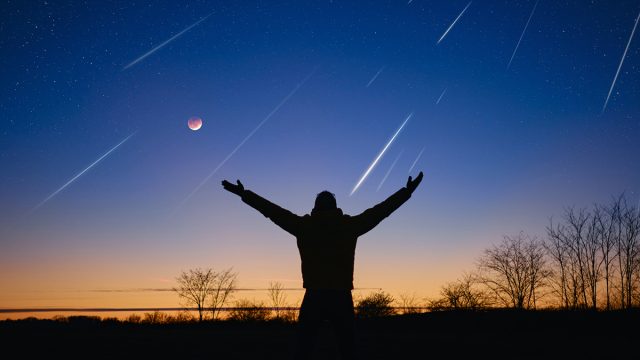
Now that the weather is finally warming up, it’s getting a lot easier to get back outdoors and enjoy nature, especially for anyone who loves to stargaze. On top of that, the awe-inspiring imagery of NASA’s recent Artemis II mission to orbit the moon has also brought fresh attention to the night sky and reinvigorated our wonder for the cosmos. But while there’s always beauty to behold above, amateur astronomers have plenty to look forward to in the coming days, as the Lyrid meteor shower hits its peak this week and brings brilliant “fireballs” to the night sky.
When does the Lyrid meteor shower peak?
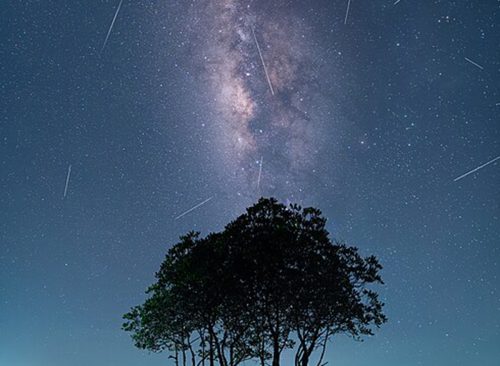
If you’ve been waiting for a reason to get outside and look up, you officially have it: The Lyrid meteor shower is about to reach its apex.
The annual celestial event officially began back on the evening of April 14, and thanks to the convenient timing with the new moon, some of the earliest faint meteors were potentially visible. But the real spectacle is about to begin, from the evening of April 21 through the morning of April 22, marking the period of highest activity, Forbes reports.
The shower will then carry on for a few more days, with the following evening also expected to be a relatively busy night for “shooting stars.” They will then begin to wind down and eventually end early next week.
What is the Lyrid meteor shower?
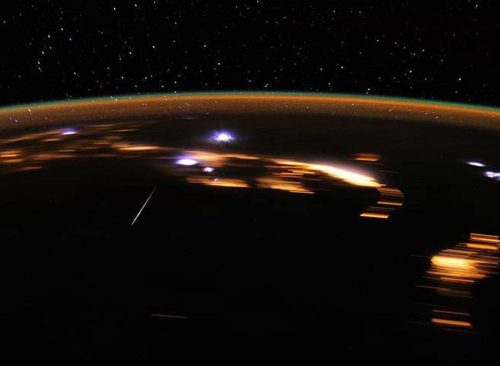
While they may not be as prominent as the Geminid or Perseid showers, the Lyrids are still a notable event. They have the distinction of being one of the oldest recurring showers in recorded history, with mentions of the event dating back to China in 687 BC, per NASA.
The shower itself gets its name from its “radiant” point (or the area of the sky where the meteors appear to develop) in the Lyra constellation. However, the actual source of the “shooting stars” comes from the dust, rock, and debris left behind by Comet Thatcher, a slow-moving object that orbits the sun once about every 415.5 years, per Space.com. The last time it made its closest passage to the center of the solar system was in 1861, the year it was first spotted.
Compared to other showers, the Lyrids aren’t especially known for creating the long, glowing “trains” that sometimes develop with meteors. Instead, they tend to produce brilliant flashes of explosive light known as “fireballs” as they enter the Earth’s atmosphere, according to NASA.
RELATED: 8 Amazing Things You Can See in the Night Sky Without a Telescope.
Some years can be quite spectacular for the Lryids
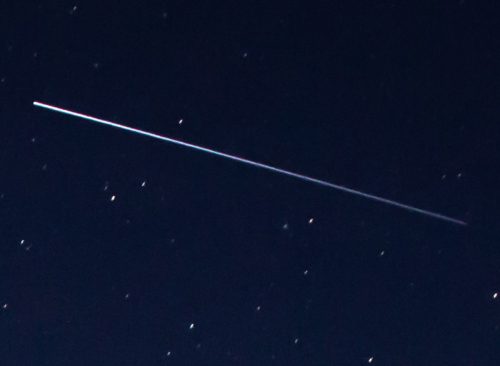
Even though the Lyrids are an annual event, they’re not exactly the same from year to year. Typically, the shower produces a reliable 15 to 20 meteors per hour, according to Space.com. But during some years, “outbursts” can greatly increase activity, pushing numbers to about 100 per hour.
Unfortunately, it can be difficult to predict exactly when these banner years will occur. In the past, outburst years were reported in Virginia in 1803, Greece in 1922, Japan in 1945, and in the U.S. in 1982, according to NASA.
What’s the best way to watch the Lyrid meteor shower?
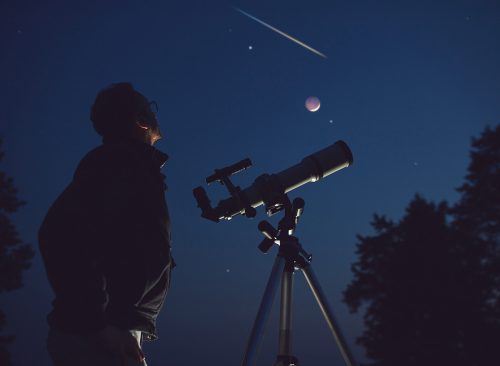
As amateur astronomers are all too aware, the best meteor shower viewing experiences tend to come down to one thing: Your local weather forecast. But assuming there are clear skies in your area on the evening of April 21, you can at least count on some favorable viewing conditions. That’s because the first quarter moon will set earlier in the evening, making viewing later at night during the peak much easier due to decreased light pollution, per Space.com.
Speaking of interfering brightness, anyone hoping for the best view of the shooting stars is better off heading out to an area away from city lights to secure the darkest conditions possible. Once there, you’ll need about 20 minutes for your eyes to fully adjust to conditions, so try to avoid looking at your phone screen, kick back, and try to relax.
Since it’s still April, you’ll also want to prepare to get comfy. Depending on your local weather, that usually means bringing a comfy blanket, wearing warm clothing, and finding a chair or blanket to lie down on. For the best Lyrids experience, try to find an unobstructed view of as much sky as possible (avoiding mountains, buildings, or trees) and lie down with your feet facing east, per NASA. And above all, try to be patient: One of the joys of meteor showers is catching a glimpse of that dazzling fireball when you least expect it!