4 Winter Birds You Can Attract by Prepping Your Yard Now

Winter is known as a fairly drab time of year as far as signs of life go. But if you make the right preparations, you can get a few cold-weather surprises. For example, getting the right plants in the ground can give your garden a little bit of winter color when it needs it most. But if you’re an amateur ornithologist, you might be surprised to learn that you can keep your garden lively during the long, chilly march up to springtime. Here are some winter birds you can attract, but only if you start prepping your yard now.
RELATED: 3 Plants You Should Prune Before Winter Begins.
1. Dark‑Eyed Junco
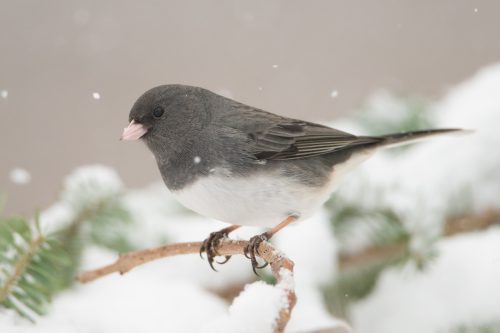
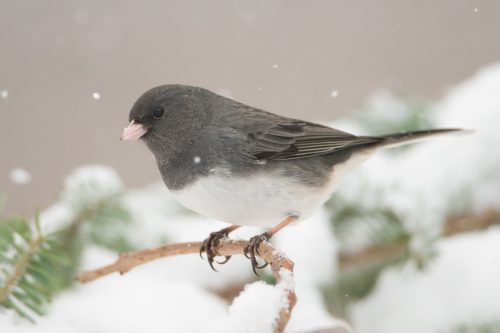
Traditional bird feeders are great for attracting certain species that like perching, but it’s a different story when it comes to ground-feeding sparrows like the Dark-eyed Junco.
As a typical “snowbird” that shows up in time for the cold season, they still appreciate something to eat. But instead of hanging their meals, take the time to spread some mixed seeds and oats right on the ground in your yard. And while getting most of the leaves and brush out of the way is an important chore to keep it healthy over the winter, you might want to leave a little something behind.
According to the National Wildlife Foundation, ground-feeders appreciate a corner of the yard with a little place to hide or roost at night. Fallen evergreen branches tend to work best, but if you combine whatever you have lying around with something for them to eat, it’ll likely be a surefire hit.
2. Chickadees
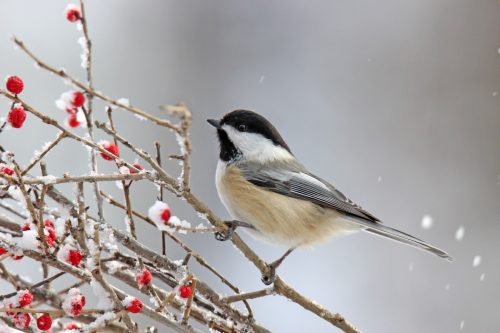
As with many other animals seeking out food during the winter, smaller birds like Chickadees (especially the Black-capped Chickadee) are looking for a certain kind of sustenance. Specifically, they want a high-fat offering, which is easiest to supply with a suet cake or a fatty mixture you can leave outside for them, according to Homes & Gardens.
Suet cakes are easily purchased at most garden and home supply stores, and work best when they’re hung up in a cling feeder around your yard. But if you really want the Chickadees to come through, you can also whip up a batch of your own fatty feed mix, per the University of Illinois Urbana-Champaign Extension.
Simply mix a cup each of peanut butter, vegetable shortening, and flour with four cups of cornmeal (and an optional handful of sunflower seeds) and then take it outside to smear on trees around your yard. You can also freeze the mix into blocks that can be hung in feeders, which you can ideally plant near other trees or shrubs.
RELATED: The 10 Best Places to Visit in the U.S. for Birdwatching.
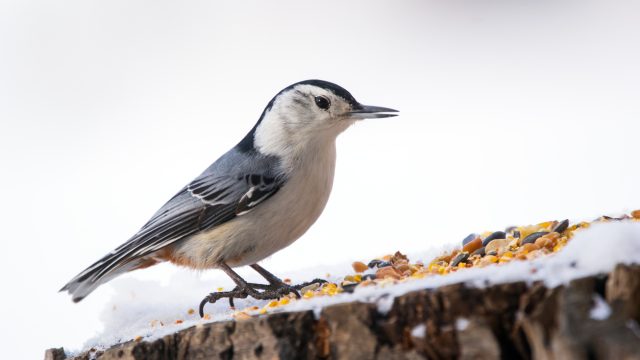
3. White‑Breasted Nuthatch
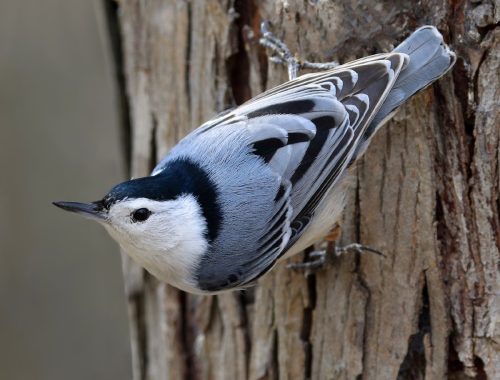
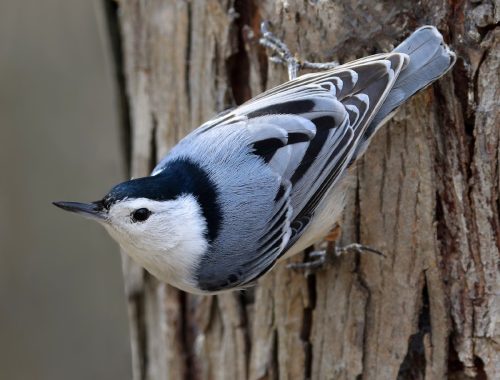
It’s no secret that what you plant can be a huge draw for insects and animals during the warmer months. However, that can also extend to birds like the White‑breasted Nuthatch. The species uses caching to survive the winter, which means hiding the seeds and other food they find to eat when the weather gets colder, according to the Cornell Lab.
In the short term, the easiest way to attract this species in the winter is to hang suet cakes or wipe some of your homemade mixture on trees around your yard.
But if you’re planning ahead, planting some trees that produce nuts or winter berries is another great way to keep them around, per HGTV. Also, be sure to leave any non-dangerous branches and hanging bark on trees so they’ll have a hunting habitat to work with.
4. Cedar Waxwing
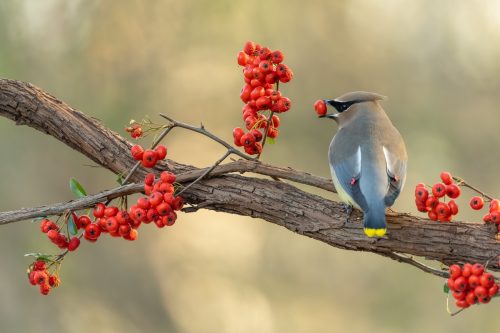
While plenty of species sustain themselves mostly on seeds, the Cedar Waxwing is one of the few that actually prefers to eat berries once their steady supply of insects has vanished for the winter, according to Cornell Labs. Fortunately, this makes it easy to entice them into your yard with the right planning.
Shrubs such as winterberry holly, which bear berries during the winter, are a favorite of the species. And not only will you invite plenty of Waxwings to dine, but the fruit itself provides a pleasant pop of color when your yard can really use it. Other popular fruit-bearing trees and shrubs include dogwood trees, juniper, chokeberry, and viburnum.