Meteor Shower With a “Flurry of Shooting Stars” Peaks This Week—How to See It

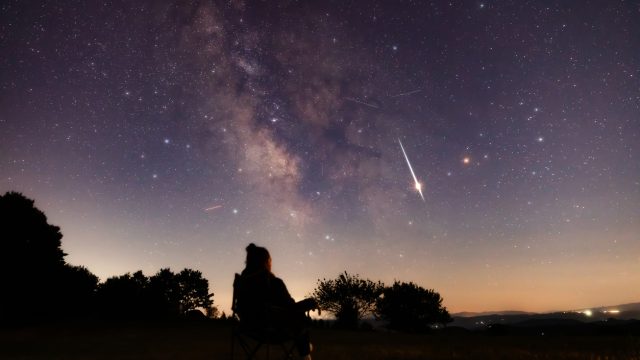
Enjoying nature in autumn isn’t just about catching all that beautiful fall foliage before winter arrives. Amateur astronomers and stargazers know this time of year can also get very active for their favorite hobby, with plenty of events on the calendar that warrant picking a spot outside, getting comfortable, and taking some time to look up. And it’s not just particularly vivid Northern Lights displays, either: This week, the Orionid meteor will hit its peak and bring a long a “flurry of shooting stars” for eager spectators.
RELATED: When 5 U.S. Regions Will Hit Peak Fall Foliage This Year.
When does the Orionid meteor shower peak?
If you missed out on some of the summer’s best stellar displays, you won’t have to wait too much longer to make up for it. After kicking off on Oct. 2, the Orionid meteor shower will hit its peak tonight, Oct. 20, Space.com reports.
This evening, anyone willing to brave the brisk autumn twilight hours outdoors will be in for a special treat. At their most active, the Orionids typically bring 10 to 20 shooting stars per hour and create “one of the most beautiful showers of the year,” according to NASA. This particular cascade of meteors is also stunning because of their composition, which can often leave glowing “trains” in their wake across the sky that can last for seconds or even minutes after they’ve passed. Some of the fastest can also produce “fireballs” that create an exhilerating burst of light, per the space agency.
As if that wasn’t enough, anyone watching this year might be in for an especially memorable show. That’s because the Orionids’ annual peak happens to very nearly coincide with a new moon in 2025, meaning the sky will have almost no natural light to drown out the streaking meteors and creating nearly ideal conditions for viewing, according to Space.com.
What causes the Orionid meteor shower?
While the Orionid meteor shower may not be as much of a household names as the Leonids or Perseids, their origins certainly are. The materials that provide this dazzling nighttime show come from pieces of ice and dust left in the wake of Halley’s Comet, a well-known celestial object that passes by Earth every 76 years, according to NASA. Even though the regular visitor won’t be in our vicinity again until 2061, this annual visit (along with the Eta Aquarids in May) are a yearly reminder of its presence in our solar system.
But how does the Orionid meteor shower get its name? The “shooting stars” you’ll see tonight have a radiant point—or place in the sky where they appear to originate—within the constellation Orion. The easy-to-spot collection of stars is a fixture of the autumn and winter night sky, thanks to its “belt” made up of three stars in a line.
RELATED: 8 Amazing Things You Can See in the Night Sky Without a Telescope.
What’s the best way to watch a meteor shower?
Barring any unfavorable local weather conditions, anyone planning to watch the Orionid meteor shower this year should plan on staying up fairly late. Peak activity is expected in the early morning hours of Oct. 21 in the U.S., around 2 a.m. specifically, according to EarthSky.
But timing isn’t everything: Location is also key to an optimal meteor shower viewing experience. Even though there won’t be moonlight, it’s best to pick a location away from human-made light pollution with as wide a view of the entire night sky. And even though Orion will be situated along the southern stretch of the horizon when peak hits, it’s still ideal to for an open sightline to as much of the cosmos above as possible, per EarthSky.
Besides that, make sure you’re prepared to stay nice and comfy with a blanket, sleeping bag, or reclining lawn chair. Once you’ve arrived at your viewing destination, keep in mind that it will take anywhere from 10 to 20 minutes for your eyes to fully adjust to the low light—so resist the temptation to look at your bright phone screen. From there, just sit back, look up, and wait for the show.